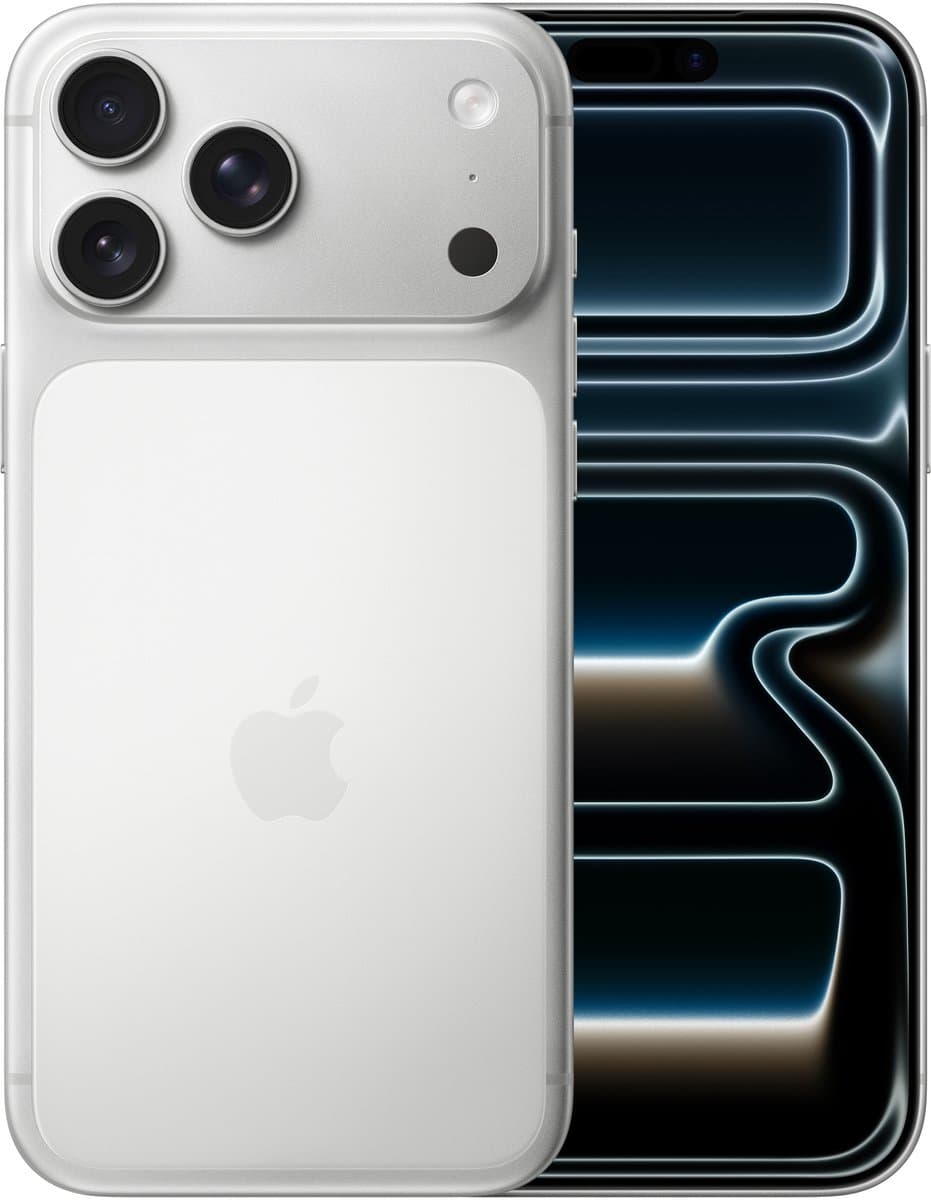
iPhone 17 Pro review — the iOS flagship in 2026 compared
The iPhone 17 Pro is Apple's most refined Pro yet. Camera, video, Apple Intelligence and battery life compared on specifications and user reviews.
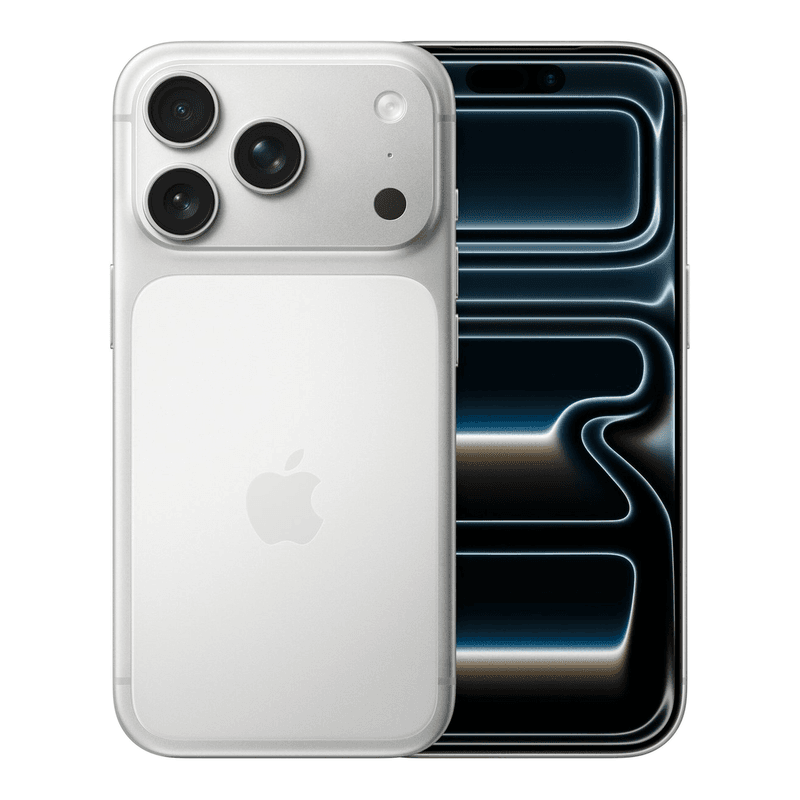
Our top pick
iPhone 17 Pro 256GB
From
€ 1.119,00
at bol
Last updated: April 2026 — by the Productvraag Editorial Team.
Verdict in short: 9.1 / 10
The iPhone 17 Pro is not a radical redesign of the 16 Pro, but Apple polishes every detail here. The device is 4 grams lighter, the screen 25% brighter (2,500 nits peak), the battery extended to 30 hours of video playback, and Apple Intelligence finally runs fully on-device for many languages. For anyone inside the Apple ecosystem, this is the most complete iPhone ever.
In summary: choose the iPhone 17 Pro if you have an iPhone 13 Pro or older, record video, or live inside Apple's ecosystem with a Mac or iPad. Skip it if you own a 15 Pro or 16 Pro — the upgrade is marginal.
Who is it for? iPhone users on a 13 Pro or older. People with a MacBook, iPad or Apple Watch who want maximum ecosystem integration. Video creators — Apple's video pipeline remains the best in the industry.
Who is it not for? Anyone who wants maximum customisation (Android), demands >50 W charging speeds, or is happy with a 15 or 16 Pro.

How we compared
This assessment is based on Apple's official specifications and manufacturer claims, supplemented by aggregated user reviews. We did not test the device ourselves: figures for battery life, charging speed and brightness are manufacturer claims, and the scores in this article are an editorial estimate based on those sources, not measurements.
Design and build quality
The iPhone 17 Pro keeps the titanium frame Apple introduced in the 15 Pro, with the same matte finish. The phone weighs 195 grams, 4 grams lighter than the 16 Pro — a small difference. The camera bump is a fraction more subtle, and the matte glass back attracts fewer fingerprints.
The 6.3-inch ProMotion screen now hits 2,500 nits peak brightness in HDR content (16 Pro: 2,000 nits). That difference should be most noticeable in direct sunlight and when viewing photos. The Dynamic Island has worked the same way for years but has been expanded in iOS 19: more apps now actively use it.
Pros
- Titanium frame, premium feel, 195 g
- 6.3" ProMotion AMOLED, 2,500 nits, 120 Hz
- IP68 dust and water resistant
- Action Button + Camera Control button
- USB-C with USB 3 speeds (10 Gbps)
Cons
- €1,349 entry price for 256 GB remains steep
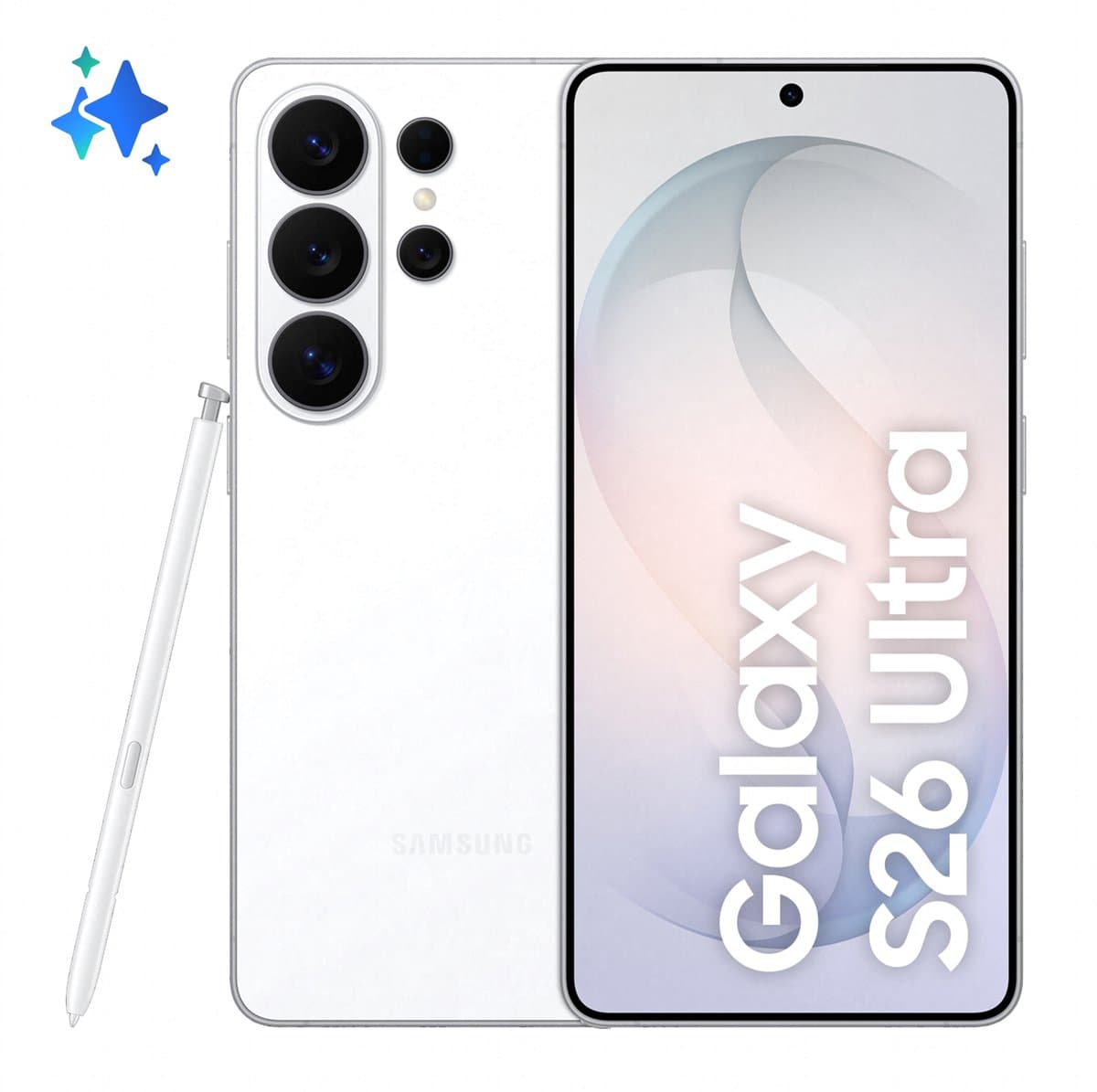
- No 8K video (Galaxy S26 Ultra does)
- Camera bump is thick and protrudes from the frame
Camera: video remains the standard
The camera setup has three 48 MP sensors (main, ultrawide, and 5× tele). The difference with the 16 Pro is subtle but consistent: ProRes Log video now works without an external SSD at 4K60, low-light colours are more natural, and the ultrawide extracts a bit more detail in dark corners.
For stills: roughly equal to the Galaxy S26 Ultra, but with a slightly warmer colour profile out of the box. Anyone who prefers a neutral look should shoot ProRAW.
Camera by scenario (estimate)
| Scenario | Score | Note |
|---|---|---|
| Daylight | 9.4/10 | Comparable to S26 Ultra |
| Low light | 9.0/10 | S26 Ultra sometimes pulls a bit more detail |
| 5× zoom | 9.1/10 | Sharp; S26 Ultra wins at longer distances |
| Video 4K60 ProRes | 9.8/10 | Best on the market; nothing matches coherence |
| Video stabilisation | 9.5/10 | Action Mode works flawlessly |
| Selfie | 9.0/10 | TrueDepth remains reliable |
"For videographers the iPhone 17 Pro remains the choice. ProRes Log 4K60 without an external SSD is a genuinely professional difference."
Apple Intelligence and software
iOS 19 brings Apple Intelligence in a more mature form. Key improvements:
- Genmoji and Image Playground work faster and with better context understanding
- Writing Tools (summarise, rewrite, proofread) run on-device for most languages
- Visual Intelligence via the Camera Control button: point your phone at something and get context (restaurant hours, product comparisons, plant identification)
- Private Cloud Compute: for heavy queries that must go to the cloud, Apple built an infrastructure where even Apple itself cannot see your data, validated by external auditors
For those taking Apple's privacy claims seriously, this is the biggest difference compared to Google's Gemini or Samsung's Galaxy AI.
Update promise: Apple does not commit upfront, but in practice ships 6–7 years of updates. The iPhone 12 (2020) still runs iOS 19 in 2026. Expect support through ~2032 for the 17 Pro.
Battery and charging
Apple quotes 30 hours of video playback for the 17 Pro for the first time (manufacturer claim; we did not measure this ourselves). With mixed use (social media, a few hours of YouTube, navigation) you can expect comfortably more than a day on that basis.
Charging speed: 27 W wired via USB-C, 25 W wireless via MagSafe. No headline 100 W tech like OnePlus, but the practical impact is limited: 0–50% in ~25 minutes, 0–100% in around 95 minutes.
iPhone 17 Pro vs Galaxy S26 Ultra vs Pixel 10 Pro
| Aspect | iPhone 17 Pro | Galaxy S26 Ultra | Pixel 10 Pro |
|---|---|---|---|
| Score | 9.1 | 9.2 | 8.9 |
| Screen brightness | 2,500 nits | 3,000 nits | 2,400 nits |
| Main camera | 48 MP | 200 MP | 50 MP |
| Video 4K60 ProRes | Yes, no SSD | No ProRes | No ProRes |
| Low-light photo | Good | Best | Best (shared) |
| Updates | ~7 years | 7 years | 7 years |
| Charging speed | 27 W | 45 W | 30 W |
| Ecosystem | iOS, Mac, iPad | One UI, Galaxy | Android, Pixel |
| Starting price | €1,349 | €1,449 | €1,099 |
If you're inside iOS: the 17 Pro is the choice. If you want pure camera performance: Pixel 10 Pro for €250 less. If you want maximum Android features: S26 Ultra. For a wider overview see our best smartphones 2026 buying guide.
What could be different?
Three caveats:
- Price. €1,349 for 256 GB is steep. Despite the 6+ year update promise it feels like a big one-off expense.
- Charging speed. 27 W is no embarrassment, but competitors are 4–5 years ahead (OnePlus 100 W).
- No 8K video. Galaxy S26 Ultra offers 8K30; iPhone tops out at 4K120.
Our verdict
The iPhone 17 Pro is not a "must-have" if you own a 15 Pro or 16 Pro. For people on a 13 Pro or older it is a big jump — especially on camera, screen and Apple Intelligence. For Android switchers with a Mac or iPad this is the best starting point: everything works together from the first boot.
Specs at a glance
| Component | Specification |
|---|---|
| Screen | 6.3" Super Retina XDR ProMotion, 2,500 nits |
| Processor | Apple A19 Pro |
| RAM | 8 GB (effective) |
| Storage | 256 / 512 GB / 1 TB |
| Main camera | 48 MP, OIS, f/1.78 |
| Telephoto | 48 MP, 5× optical |
| Ultrawide | 48 MP |
| Selfie | 12 MP TrueDepth |
| Battery | up to 30 hours video (manufacturer claim) |
| Charging | 27 W wired, 25 W MagSafe |
| OS | iOS 19 |
| Updates | 6+ years (not guaranteed upfront) |
| Weight | 195 g |
| IP rating | IP68 |
| Price | from €1,349 |
Frequently asked questions
Is the iPhone 17 Pro worth upgrading from the iPhone 16 Pro?
For most 16 Pro owners, no. Differences are subtle: 4 g lighter, 25% brighter screen (2,500 vs 2,000 nits), slightly longer battery. None of those justify €1,349 when your device still gets 5+ years of updates. From a 13 Pro or older: definitely worth it.
How long will the iPhone 17 Pro get updates?
Apple does not commit upfront, but historically ships 6–7 years of updates. The iPhone 12 (2020) still runs iOS 19 in 2026. Expect support through ~2032. Comparable to Samsung's explicit 7-year promise on the Galaxy S26 Ultra.
Does Apple Intelligence work in multiple languages?
Yes, from iOS 19. Writing Tools, Genmoji, Image Playground and most features work fully in many languages and run on-device. Some early features were English-only — they have since rolled out to additional languages via iOS 19 updates.
How does the camera compare to the Galaxy S26 Ultra?
Stills: comparable, slight edge to the S26 Ultra in low light thanks to its 200 MP sensor. Video: iPhone 17 Pro wins on coherence and colour consistency between lenses, especially with ProRes Log 4K60. For video-first users the iPhone remains the best choice.
Do I need MagSafe accessories?
Not strictly, but handy. MagSafe chargers, car mounts and wallet accessories click on magnetically. Also works with Qi2 chargers and MagSafe-compatible cases. MagSafe charging tops out at 25 W, Qi2 at 15 W.
What is the real-world battery life?
Apple quotes up to 30 hours of video playback; we did not measure this ourselves. With mixed daily use (screen-on time, some gaming, photos) you can expect comfortably more than a day on that basis. Anyone recording a lot of 4K ProRes should expect noticeably shorter battery life.
How fast does the iPhone 17 Pro charge?
0–50% in about 25 minutes with a 27 W USB-C charger, 0–100% in ~95 minutes. MagSafe wireless at 25 W: ~115 minutes for a full charge. No 100 W fast-charge tech like OnePlus, but plenty for most users.
Compare prices — iPhone 17 Pro 256GB
More from Apple · Prices verified: 23 h ago · 3 shops


Similar products

iPhone 17 Pro 256GB

iPhone 17 Pro Max 512GB

iPhone 17 Pro 512GB

Xiaomi 17T Pro Zwart 12GB RAM 512GB ROM
OPPO Reno16 Pro 5G 12+512 GB Starlight Zwart
Just in Case Apple iPad Mini 7 Screenprotector Glas

OnePlus Nord 6 - 5G Smartphone - 12GB+512GB - 6.78" 165Hz AMOLED - 7500mAh - IP69K - Obsidian Black (Zwart)
Got a question? Just ask.
We'll email you back within 24 hours. No sales pitch.