Best Fans 2026: Tower, Pedestal & Desk Fans Compared
Surviving 30°C summers without AC? We compare 7 fans for bedroom, office and living room — quiet, powerful and efficient.
Our top pick
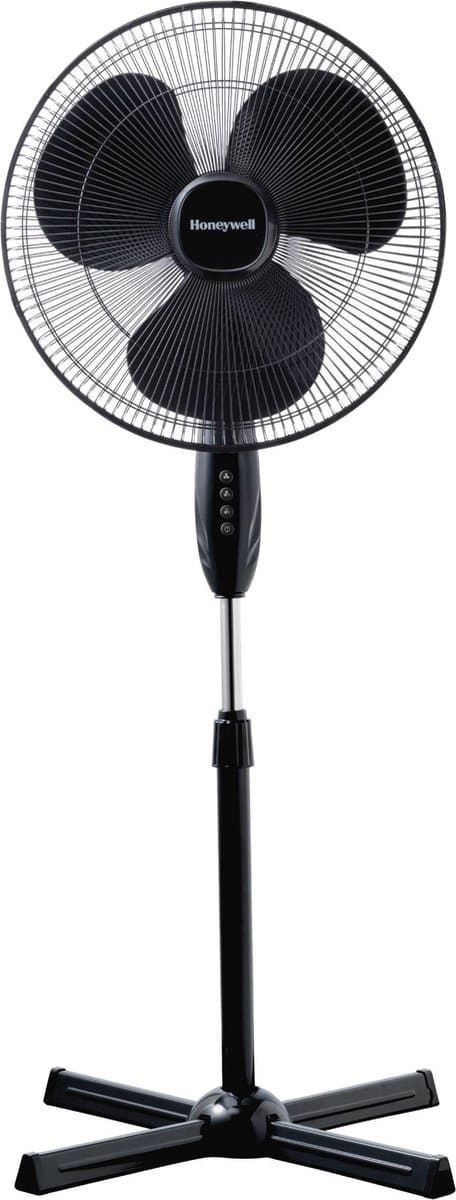
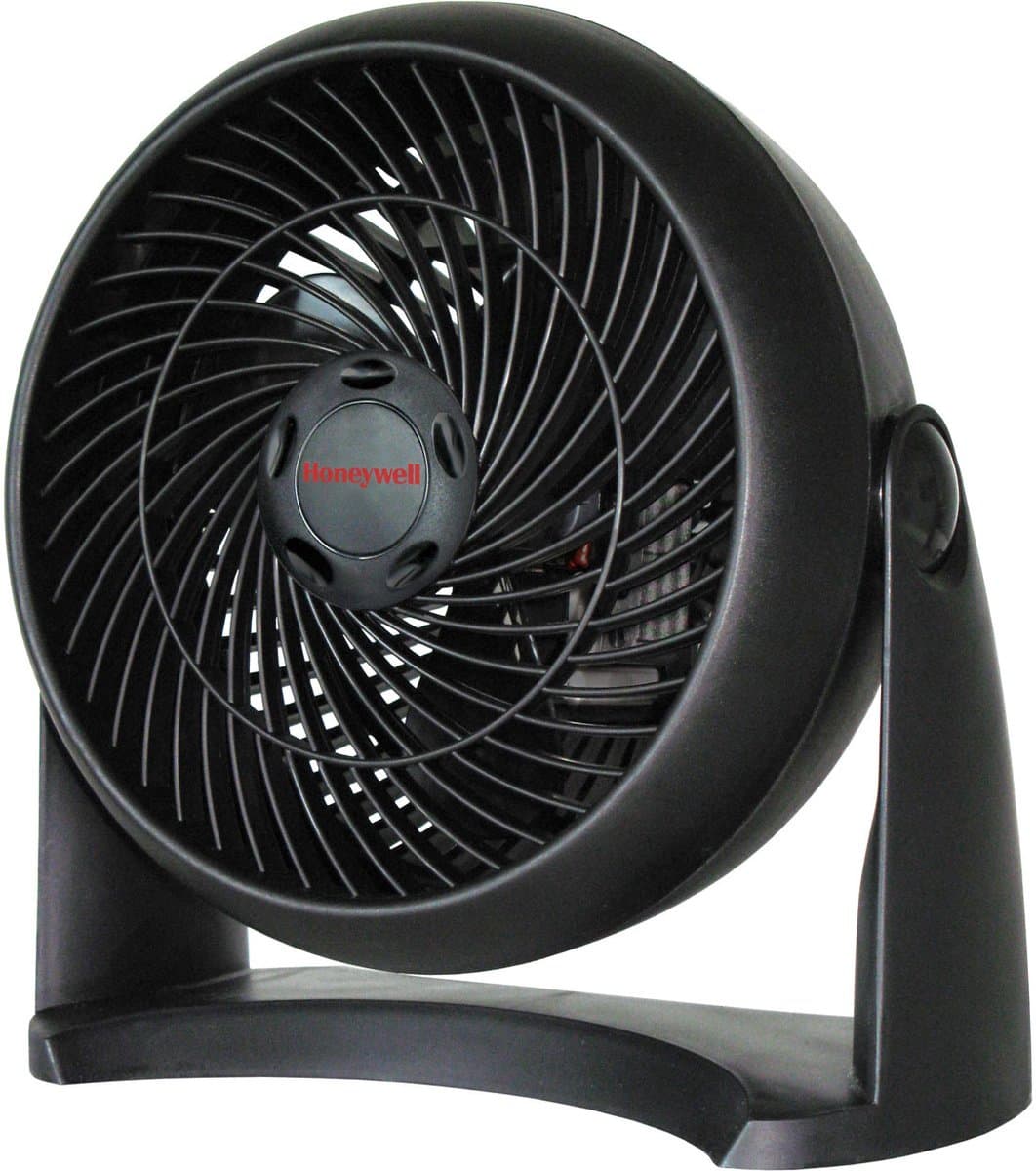
Honeywell HT900E - Vloerventilator - compact en geruisloos
Best Desk Fan Under €40
From
€ 57,00
at bol
Top producten vergelijken


Surviving 30°C summers without AC? We compare 7 fans for bedroom, office and living room — quiet, powerful and efficient.
Best Fans 2026: Tower, Pedestal & Desk Fans Compared
Summer 2026 is getting off to an early start, with warm spells and temperatures that can head towards 34°C in the Randstad. Installing an AC unit quickly costs €1,500 and requires a technician — a good fan costs a fraction of that and arrives tomorrow. Which type suits your situation? For the bedroom, choose on noise (max. 40 dB). For the living room, choose on airflow (minimum 500 m³/h). For the home office, choose on size and energy use. In this guide the Productvraag editorial team compares seven concrete models — from a bladeless premium tower to a USB desk fan — based on manufacturer specifications (dB, m³/h, watts) and aggregated user reviews, so you know exactly what you are buying.
Our 7 Favourite Fans
Dyson Hot+Cool HF1 — Premium tower fan (€329-€399)
The Dyson Hot+Cool HF1 is a bladeless tower fan with integrated HEPA air purifier and heating function. Besides cooling, you can use it as a heater and air purifier — three functions in one unit. Air Multiplier technology amplifies airflow without blades. Ten airflow settings; remote control included. Auto sleep timer. White finish; height: 100 cm. Dyson offers a two-year warranty on registered purchases.
Princess DC Tower Fan 91cm — Best tower fan under €100 (€55-€79)
The Princess 91cm DC Tower Fan uses an energy-efficient DC motor and offers 12 speed settings plus four wind modes. 90° oscillation covers a spacious room well. Remote control and timer included. Height: 91 cm. Black finish.
Honeywell HSF1630E4 — Best oscillating tower fan (€69-€89)
The Honeywell HSF1630E4 is a pedestal fan with a 40 cm blade and three speed settings. 90° oscillation provides wide air distribution. Height adjustable from 97 to 123 cm. Remote control and timer included. Noise at low setting: approx. 48 dB. Black finish.
Vornado 533 — Best for living room (€149-€199)
The Vornado 533 is a compact table fan with the signature Vortex airflow: air is driven through the room in a spiral for better circulation. Quiet, with an effective range of approximately 21 metres. Three speeds; compact dimensions fit any desk or nightstand. Black finish. Recommended for use in the living room or bedroom.
Bestron AFT760W — Best Pedestal (€45-€65)
The Bestron AFT760W is a classic pedestal fan with three blades of 40 cm diameter. Height adjustable from 90 to 130 cm, oscillation 80 degrees, three speeds. Power: maximum 50W (speed 3), minimum 30W (speed 1). Airflow at maximum speed: 460 m³/h.
At speed 1 the Bestron is rated at 38 dB by the manufacturer — the lowest rated value of any model in this guide, which makes it theoretically usable as a bedroom fan. Testing in your own bedroom (most webshops offer a 30-day return policy) is advisable.
The key advantage: the pedestal can be set to exactly chest height for direct cooling at a desk or on the sofa. No app, no Wi-Fi, no timer — just turn a knob. The absence of smart features is also its strength: nothing can break. For €45-€65 this is the most robust choice in the budget segment.
MeacoFan Sefte 8 Table — Quietest bedroom fan (€89-€109)
The MeacoFan Sefte 8 Table is a table fan with a 20 cm blade and DC motor that runs virtually silently at low settings — ideal next to the bed. Ten speeds; auto shut-off and sleep timer. Pivoting head for indirect airflow. Blade design minimises turbulence noise. White/grey design fits a nightstand. Compact and energy-efficient.
Honeywell HT900E — Best Desk Fan Under €40 (€25-€40)
The Honeywell HT900E is a compact floor/table fan with a 23 cm blade and two speeds. Portable; runs off a 220V mains socket. Ideal for a home office or small bedroom. Noise at lowest setting: approx. 45 dB. Black finish.
Compare prices — Honeywell HT900E - Vloerventilator - compact en geruisloos
More from Honeywell · Prices verified: 23 h ago · 1 shop

Which Type of Fan Suits Your Situation?
Tower vs. Floor Fan
A tower fan moves air through a tall narrow slot — wide airstream but less force per unit area. A floor fan (such as the Vornado 533) concentrates air and reaches greater distances. Choose a tower for rooms up to 20 m² where you want to direct airflow around the space via oscillation. Choose a floor or circulation fan for rooms above 25 m² where full air circulation matters more than direct cooling.
Desk and USB Fans
A desk fan cools one person, not a room. The value is personal comfort at close range (30-80 cm). USB models run entirely off your laptop or monitor — convenient but limited in power. Mains-powered models (such as the Bestron on a desk) deliver more airflow but need a socket.
Noise Level: The Bedroom Standard
Sleep experts set 35-40 dB as the maximum background noise threshold for undisturbed sleep. In this roundup, the MeacoFan Sefte 8 Table (37 dB at speed 5) and the Bestron AFT760W (38 dB at speed 1) meet that standard. Do not just look at the minimum value on the lowest setting — check the value at the speed you will actually use in warm weather.
Energy Use Per Night
At an average electricity price of €0.32/kWh (2026), one night of fan use (8 hours) costs:
- MeacoFan Sefte 8 Table at speed 5 (12W): 0.096 kWh = €0.03
- Vornado 533 at speed 2 (55W): 0.44 kWh = €0.14
A fan runs a full summer for €5-€25 in electricity. By comparison: a portable AC unit at 1,000W costs around €230 for the same summer.
Oscillation Angle
The Honeywell HSF1630E4 and the Princess DC Tower Fan both oscillate around 90 degrees — suited for corner placement. Floor and desk models generally do not oscillate, or do so optionally. A wider oscillation angle is relevant if you want one fan placed in a corner to cover an entire room.
Frequently Asked Questions
Is a tower fan better than a pedestal fan with blades?
Not necessarily. A tower distributes air more widely thanks to its tall slot opening, which is pleasant for multiple people in the same room. A pedestal fan with blades typically delivers more airflow per watt and is quieter at low speeds. For a bedroom, the pedestal model generally offers a better price-to-noise ratio.
How many dB is acceptable for sleeping?
Sleep research places the limit at 40 dB for the average sleeper. Light sleepers or people with sleep difficulties should choose a model that reaches 35 dB or less at a working speed. Do not just look at the minimum value on the lowest setting — check the value at the speed you will actually use in warm weather.
Does a bladeless fan actually work better?
The term "bladeless" is marketing language: bladeless fans (such as Dyson) do have blades, hidden in the base. The advantages are safety (no accessible blades for children), easy cleaning and a smoother airstream. The airflow is not stronger than a comparable conventional fan. The noise profile is different — less mechanical clicking, more airflow sound.
Can a fan replace an air conditioner?
No. A fan lowers the perceived temperature by accelerating evaporation (sweat cools your skin), but does not lower the actual air temperature. At air temperatures above 35°C — especially at high humidity — the cooling effect of a fan diminishes sharply and can even worsen the heat if the fan air is warmer than body temperature. For sustained room cooling above 32°C, an AC unit is necessary.
How much electricity does a fan use per night?
An efficient bedroom fan like the MeacoFan Sefte 8 Table uses around 12W at speed 5, which equals 0.096 kWh per 8-hour night — under €0.04. A powerful living room fan like the Vornado 533 at speed 2 uses 55W, around €0.14 per night. Even the most energy-hungry fan in this roundup costs less than €30 per year with daily summer use.
How long does a fan last?
A decent-quality fan used seasonally (4-6 months per year, averaging 6 hours per day) lasts 8-12 years. The most vulnerable parts are the motor and the remote control. Models with metal motor housings (Vornado, Honeywell) are more durable than fully plastic constructions. Keeping grilles and blades dust-free annually extends lifespan considerably.
---
Our Verdict
After comparing seven models on airflow, noise, energy use and practical use, our situation-specific top three:
Bedroom: MeacoFan Sefte 8 Table (€89-€109). The 37 dB at working speed is unique in this price bracket. The automated sleep timer and fully dimmable display make it the most considered bedroom choice in this roundup.
Living room: Vornado 533 (€149-€199). For living rooms above 20 m², Vornado's circulation technology outperforms any tower oscillation. No smart features, but an expected lifespan of 10 years makes the higher purchase price relative.
Budget or secondary fan: Bestron AFT760W (€45-€65). Lowest price, lowest noise at speed 1, and adjustable height that makes it usable as both a desk fan and a bedroom fan. If you want to spend no more than €65, this delivers the most for your money.
For office workers or remote workers sharing a space, the Honeywell HT900E (€25-€40) is a smart addition to whatever is already running — not as a replacement, but as a personal cooling tool at desk distance.
Meer producten vergelijken


Got a question? Just ask.
We'll email you back within 24 hours. No sales pitch.