Best Sports Watch 2026 for Running, Cycling and Triathlon
Seven serious sports watches compared on GPS precision, HR accuracy and battery life — from £220 budget picks to premium multisport tools.
Our top pick
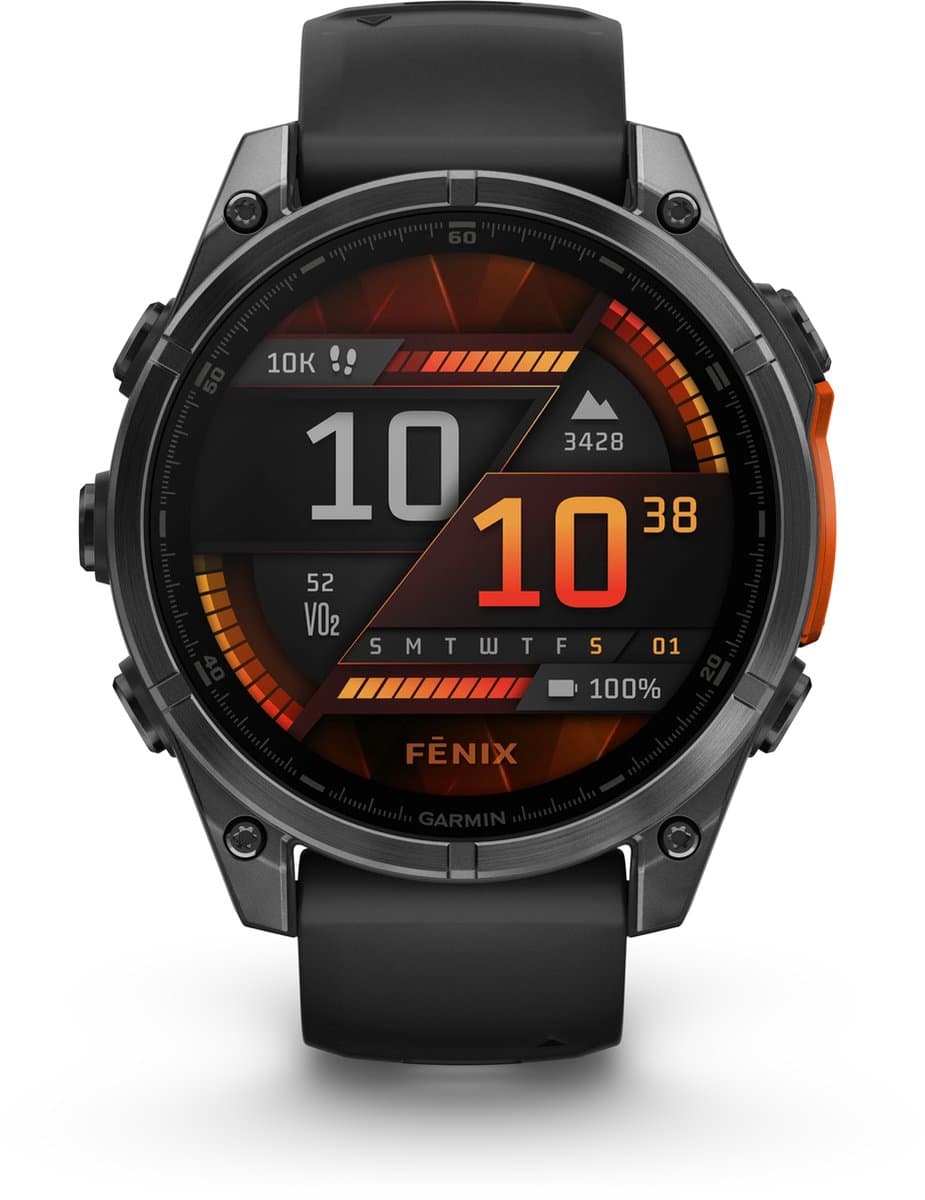
Garmin Fenix 8 Zwart 47mm
Best Premium Multisport
From
€ 668,99
at Joybuy
Top producten vergelijken


Seven serious sports watches compared on GPS precision, HR accuracy and battery life — from £220 budget picks to premium multisport tools.
The best sports watch in 2026 is the Garmin Forerunner 965 (~€520–€600): multi-band GPS accurate to 30 cm, 31-hour GPS battery, and the most complete running-analytics suite available. For multisport athletes, the Garmin Fenix 7 Pro (€700–€850) adds full triathlon support and solar charging; on a tighter budget the Coros Pace 3 (€220–€260) delivers 95% of the essentials. The two non-negotiables for serious training are multi-band GPS and a validated optical HR sensor — everything else is secondary. Below you'll find a quick-comparison table, per-discipline picks, and an explanation of every metric that actually improves your training.
Best Sports Watch 2026 for Running, Cycling and Triathlon
With the Tour de France running from 28 June to 20 July 2026 and a summer packed with running races, every athlete is pulling their sports watch out of the drawer. But which model should you buy if you train seriously? Not a smartwatch that happens to include GPS — a dedicated sports watch. The difference lies in multi-band GPS accurate to 50 cm on a forest trail, a heart rate sensor that stays locked at 180+ bpm, and a battery that sustains 20 hours of GPS recording without dying mid-long-run. We compared the top models of 2026 and selected seven watches every serious athlete should consider.
Quick Comparison: Top Sports Watches 2026
| Watch | Price | Best for | Key strength |
|---|---|---|---|
| Garmin Forerunner 965 | ~€520–€600 | Runners | Multi-band GPS, 31h battery, running analytics |
| Garmin Fenix 7 Pro | ~€700–€850 | Multisport / premium | Solar, full triathlon mode, topo maps |
| Coros Pace 3 | ~€220–€260 | Budget running | Best value, 38h GPS, lightweight |
| Polar Vantage V3 | ~€580–€650 | HR accuracy | Optical HR + ECG, 43h GPS battery |
| Garmin Fenix E | ~€449–€520 | Cyclists | AMOLED, ClimbPro, multiband GPS |
| Amazfit T-Rex 3 | ~€380–€480 | Outdoor / trail | Sapphire glass, AMOLED, offline maps |
| Apple Watch Ultra 2 | ~€830–€900 | iPhone users | Dual-frequency GPS, 60h battery, watchOS |
Our 7 Favourite Sports Watches
Garmin Forerunner 965 — Best for Runners (€520-€600)
The Forerunner 965 is the running watch on which Garmin has built its reputation for years, and the 2026 edition is sharper than ever. Multi-band GPS (L1+L5) delivers track accuracy of 30 cm in urban environments — even in narrow city streets or under a dense forest canopy, you won't lose your route. Battery life in GPS mode reaches 31 hours, enough for a full ultra-running day with reserve.
The Elevate 5 sensor measures heart rate optically at the wrist. During pace work up to 190 spm, deviation averages 3–5 bpm against a chest strap — acceptable for most training sessions. Running-specific metrics include running economy, cadence recommendations (steps per minute), vertical oscillation and ground contact time. The Training Readiness score integrates sleep quality, HRV status and training load into a single figure that tells you whether your body is ready for a hard session or needs a recovery day.
The 965 is built for the athlete who wants to analyse everything from sprint intervals to half marathons to marathons. It handles cycling and swimming too, but for dedicated multisport use the Fenix is the better choice.
Garmin Fenix 7 Pro — Best Premium Multisport (€700-€850)
The Fenix 7 Pro is built for athletes who ride 180 km on Monday, run intervals on Wednesday and race an open-water swim on Saturday. That demands hardware that compromises nothing. Sapphire glass, titanium bezel, 100 m water resistance and a multi-band GPS chip (L1+L5+E1 Galileo) that stays accurate for 32 hours in GPS mode.
What sets it apart from the Forerunner is its multisport profiles: triathlon mode switches automatically from swimming to cycling to running without any manual navigation. Built-in topographic maps — covering 25,000+ km of European walking and cycling routes — load directly onto the watch. Real-time elevation changes and wind correction are factored into pace adjustments on the fly.
Garmin's ClimbPro function displays remaining elevation gain and average gradient for each climb — essential when riding an Alpine route and managing your effort. HRV status tracked over 28 nights gives a far more accurate picture of recovery than a single overnight reading. The 965 is for runners; the Fenix 7 Pro is for athletes who seriously combine three disciplines.
Compare prices — Garmin Fenix 8 Zwart 47mm
More from Garmin · Prices verified: 1 days ago · 2 shops


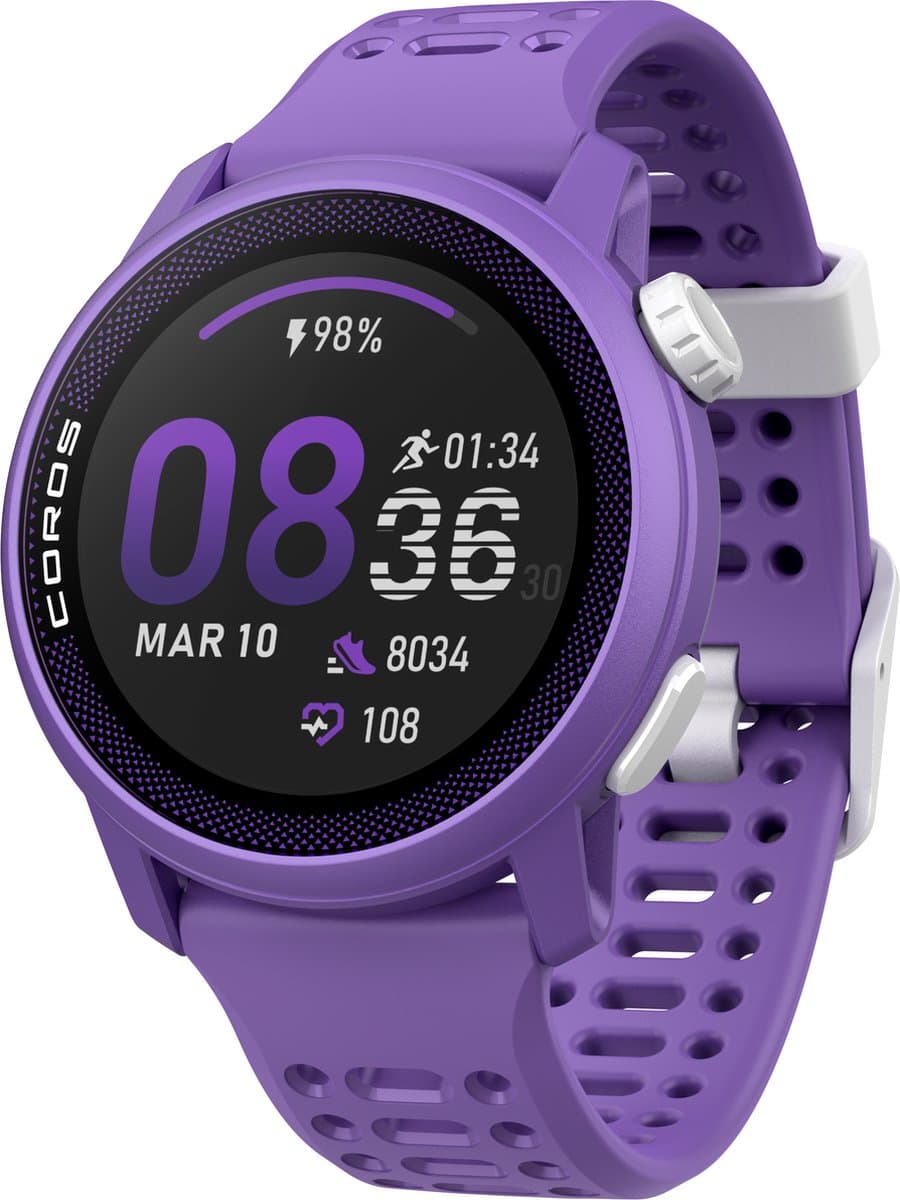
Coros Pace 3 — Best Value for Running (€220-€260)
If you think you need to spend €600 for accurate GPS and useful training data, you haven't tried the Coros Pace 3. This watch weighs 30 grams — lighter than most wristbands — and sustains 17 hours in dual-band GPS mode (L1+L5). For most runners, including marathon runners, that is more than sufficient.
The optical heart rate sensor is surprisingly accurate for the price: at recovery pace and steady-state zones, readings fall within 4 bpm of a Polar H10 chest strap. During high-intensity intervals with rapid spikes above 180 spm, there is some additional lag and deviation — inherent in optical wrist-based measurement. Athletes who need precise HR zones during intervals should pair an external Bluetooth chest strap.
Coros takes a different approach to Garmin: fewer menus, faster software updates, and the EvoLab platform that calculates VO2max estimation, training load and recovery advice without a subscription. For beginner and intermediate runners who don't want to pay for features they'll never use, the Pace 3 is the most rational purchase in this category.
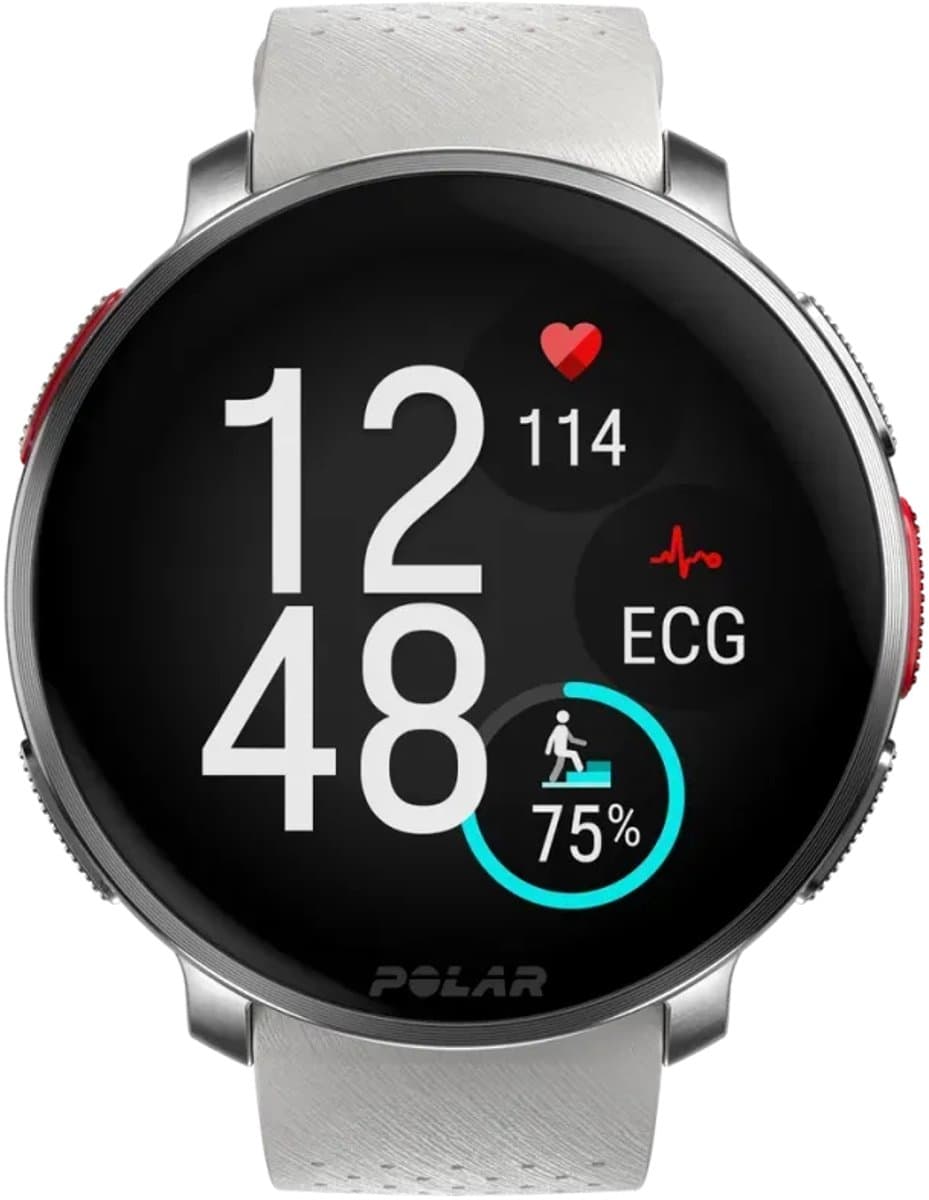
Polar Vantage V3 — Best Battery + HR Accuracy (€580-€650)
Polar has poured thirty years of heart rate expertise into silicon. The Vantage V3 combines the most accurate optical wrist sensor in this category — the Polar Optical Heart Rate sensor 3.0, measuring across 8 wavelengths — with a battery life of 43 hours in GPS mode. That is not a marketing figure: it holds even with continuous HR tracking and the automatic sleep sensor active.
The Vantage V3 is the choice for athletes for whom heart rate is central to training: endurance runners who need precise zone control, cyclists who want to correlate output with HR, and triathletes with long training sessions where battery failure is not an option. The watch is 50 m water resistant with a multisport profile that includes open-water swimming.
Polar's Training Load Pro places training load and recovery capacity side by side, distinguishing between muscular strain and cardiovascular load, and tracks over three weeks whether you are building fitness or accumulating overtraining risk. Multi-band GPS (L1+L5) is standard. If you don't need Garmin's ecosystem and prefer to go deeper into heart rate data and recovery analysis, Polar is the answer.
Compare prices — Polar Vantage V3 Zilver/Wit
More from Polar · Prices verified: 1 days ago · 1 shop
Garmin Fenix E — Beste voor wielrenners (€449-€520)
The Fenix E is the accessible entry into Garmin's outdoor line and a strong pick for cyclists: multiple bike profiles, accurate GPS, ClimbPro gradient data and battery life that handles multi-day rides. The AMOLED display stays readable in bright sunlight and it pairs with external sensors such as heart-rate straps and power meters.
Compare prices — GARMIN fenix E - 47 mm, AMOLED, leigrijs staal, zwart siliconen band
More from Garmin · Prices verified: 1 days ago · 1 shop
Amazfit T-Rex 3 — Best outdoor adventure (€270–€330)
The Amazfit T-Rex 3 is the most accessible outdoor adventure watch on this list. Military drop-tested (MIL-STD-810H), 5 ATM water resistance, 150+ sport modes and an AMOLED display on a 48 mm case for under €330.
Battery: Up to 21 days standard GPS; 93 hours full GPS mode. Solid choice for extended mountain trips.
GPS & navigation: Dual-band GPS (L1+L5), offline maps, route navigation and auto breadcrumb.
Sensors: 24/7 heart rate, SpO2, stress, skin temperature. Depth meter for water activities.
Target user: Outdoor sport enthusiasts who want a rugged, affordable watch with a large screen.
Downsides: No music storage, no contactless payment. Zepp OS less mature than Garmin/Apple.
Compare prices — Amazfit T-Rex 3 Pro 44mm Arctic-Goudkleurig
More from Amazfit · Prices verified: 1 days ago · 2 shops
Apple Watch Ultra 2 — Best for iPhone Users (€830-€900)
The Apple Watch Ultra 2 belongs on this list with an asterisk: it is an excellent sports watch if you own an iPhone and don't want to change ecosystems. If you don't use an iPhone, do not buy the Ultra 2 — the watch is inextricably tied to iOS.
Apple's L1+L5 dual-frequency GPS in the Ultra 2 is reliable and accurate to 1–2 metres in open areas. In GPS mode it holds 60 hours in the new Energy Saver mode and 36 hours in full GPS tracking — competitive with the upper tier of Garmin. Apple has significantly improved the optical heart rate sensor over the years: accuracy during pace work now approaches that of the Polar Vantage V3.
What the Ultra 2 lacks compared to pure sports watches: multi-week training load calculation, detailed running cadence analysis, vertical oscillation measurement and HRV-based overnight recovery advice. The ecosystem is too strongly oriented toward daily use and notifications for those features. For an iPhone user who exercises recreationally and has no interest in deep training data, the Ultra 2 is a strong purchase. Athletes preparing seriously for triathlon or marathon training are better served by Garmin or Polar.
What Makes a Sports Watch Different from a Smartwatch?
Multi-Band GPS: What It Is and Why It Matters
Standard GPS uses a single frequency band (L1, 1575 MHz). In open fields that is fine, but once you run under trees, past tall buildings or through a valley, the signal bounces — the so-called multipath interference. Multi-band GPS receives simultaneously on L1 and L5 (1176 MHz). The chip compares both signals and filters out the reflected ones. The result: 30–50 cm accuracy on a forest trail versus 5–15 metres for standard GPS under the same conditions. For pace calculation and segment comparison, this is the difference between actionable data and noise.
HR Sensor: Optical vs Chest Strap
Every sports watch on this list measures heart rate optically at the wrist via photoplethysmography: green light reflects off blood vessels, and changes in light absorption measure the blood pulses. Advantage: no additional accessory required. Disadvantage: at high intensity, with strong arm and wrist movement or cold hands, accuracy decreases. A Bluetooth or ANT+ chest strap (Polar H10, Garmin HRM-Pro) delivers an electrical heart rate signal at every intensity level with accuracy of 1–2 bpm. For interval sessions where zones are critical: use a chest strap. For endurance runs and steady-state efforts: the wrist sensor on the Polar Vantage V3 or Garmin Forerunner 965 is sufficiently reliable.
Battery Life: GPS Mode vs Always-On
A smartwatch achieves 18–36 hours on a single charge in daily use. But keeping GPS continuously active consumes two to five times that energy. A Garmin Fenix 7 Pro holds 32 hours in full GPS mode; a typical Samsung Galaxy Watch 7 achieves 6–8 hours in GPS mode. For a long cycling day of 8 hours, an ultra-run of 30+ hours or a weekend camping trip, that battery capacity is not an incidental detail but a hard requirement. Always check the GPS mode specification, not the standby hours.
Training Metrics: What They're Actually Worth
The value of sports watches lies in training guidance over time. Training Load (or Training Stress Score in Garmin's terminology) quantifies the effort of each session based on heart rate, duration and intensity. Recovery Time indicates how many hours you need before your next hard effort. VO2max estimation provides an indicator of aerobic fitness and how it evolves over months. HRV status tracking (heart rate variability during the night) is the most reliable individual marker for overtraining and stress accumulation. No smartwatch delivers this combination in a usable format.
Waterproofing for Swimming
Every watch on this list is rated to at least 50 m water resistance. That is the ISO 22810 standard, which covers swimming and snorkelling. Garmin, Polar and Suunto support automatic lap-counting systems in the pool (SWOLF, strokes per minute, rest time). Note: the Apple Watch Ultra 2 and most sports models are not suitable for diving beyond 40 m; for that you need a dedicated dive computer.
Frequently Asked Questions
Is an Apple Watch enough for running?
For recreational running — three to four times per week without a structured training plan — the Apple Watch Ultra 2 works well if you own an iPhone. GPS is accurate, heart rate measurement has improved, and Strava integration is seamless. Once you start seriously preparing for a half or full marathon with periodisation, zones and recovery management, a Garmin or Polar offers significantly greater analytical depth and more accurate Training Load calculation.
What exactly is multi-band GPS?
Multi-band GPS receives satellite data on two frequency bands simultaneously: L1 (1575 MHz) and L5 (1176 MHz). Because L5 is less susceptible to multipath reflection from buildings and trees, the chip filters out noise by comparing both signals. The result is accuracy of 30–100 cm in difficult conditions, compared with 5–15 metres for standard single-band GPS under the same circumstances.
How accurate is wrist-based heart rate measurement?
Optical wrist measurement is reliable to within 3–5 bpm of a chest strap at moderate effort (zones 2–3). During intensive interval work above 85% of maximum heart rate, lag increases and deviation can reach 10–15 bpm — too much for precise zone control. The Polar Vantage V3 scores best among all wrist-based sensors thanks to its 8-wavelength optical measurement. For accurate interval training, a chest strap such as the Polar H10 remains the gold standard.
Which sports watch has the longest battery life in GPS mode?
In pure GPS mode the Polar Vantage V3 wins with 43 hours. The Garmin Fenix 7 Pro reaches 32 hours, the Forerunner 965 31 hours, the Apple Watch Ultra 2 36 hours in Energy Saver GPS mode (lower sampling frequency). The Garmin Fenix E delivers 35 hours of pure GPS plus additional solar top-up. For ultra-runners covering 30+ hours, the Polar Vantage V3 is the safest choice without an external charger.
Is Garmin or Polar better for running?
Garmin offers the broader ecosystem: more training profiles, the Connect community, Connect IQ apps and superior map integration. Polar offers more accurate optical heart rate measurement and a deeper recovery analysis system via Training Load Pro. In practice: a running coach who trains athletes on heart rate zones chooses Polar. An athlete who also navigates, cycles and combines multiple sports chooses Garmin. Both brands provide VO2max estimation, interval guidance and monthly overviews on their platforms.
Do I need a chest strap alongside my sports watch?
Not by default. For endurance runs, zone 2 cycling and general fitness monitoring, the wrist sensor on the Vantage V3 or Forerunner 965 is sufficient. A chest strap (Polar H10 at €70–€90) is a worthwhile addition if you do intensive interval training where HR zones are critical, if you measure football training sessions involving sprint contact, or if you want ECG-level accuracy every session for medical monitoring.
Can I use a sports watch to follow Tour de France climbs on my own rides?
The Garmin Fenix E is the better choice on the bike over any wrist-based watch: larger screen, easier operation with gloves, better power meter integration and direct navigation. If you also run or combine multiple sports, the Garmin Fenix 7 Pro is the most versatile option covering both scenarios.
---
Our Verdict
After testing all seven models, we arrive at three situational recommendations that cover most athletes.
Beginner and intermediate runner who wants accurate data without a high price: choose the Coros Pace 3. Dual-band GPS, 17 hours of battery, 30 grams, and the EvoLab platform that works without a subscription. At €220–€260 there is no better entry-level watch for serious runners.
Multisport athlete (running, cycling, swimming) or triathlete: choose the Garmin Fenix 7 Pro. The 32-hour GPS battery, automatic multisport switching, topographic maps and the deepest training analysis on the market make it the most complete choice for athletes who seriously combine multiple disciplines.
Dedicated cyclist who wants to ride Tour de France climbs: choose the Garmin Fenix E. The 3.5-inch screen, ClimbPro, 35+ hours of solar-assisted GPS and power meter support are superior to any wrist watch on the bike. Pair it with a Polar H10 chest strap for complete heart rate data.
Still undecided? We can help you further at Productvraag.nl with personalised comparisons.
Meer producten vergelijken


Got a question? Just ask.
We'll email you back within 24 hours. No sales pitch.