OLED vs QLED 2026: Which TV Technology Should You Choose?
OLED or QLED? We compare the Samsung S90F, LG G55, Neo QLED QN82F and QLED Q7F4 on picture quality, price and use case — so you can make the right choice.
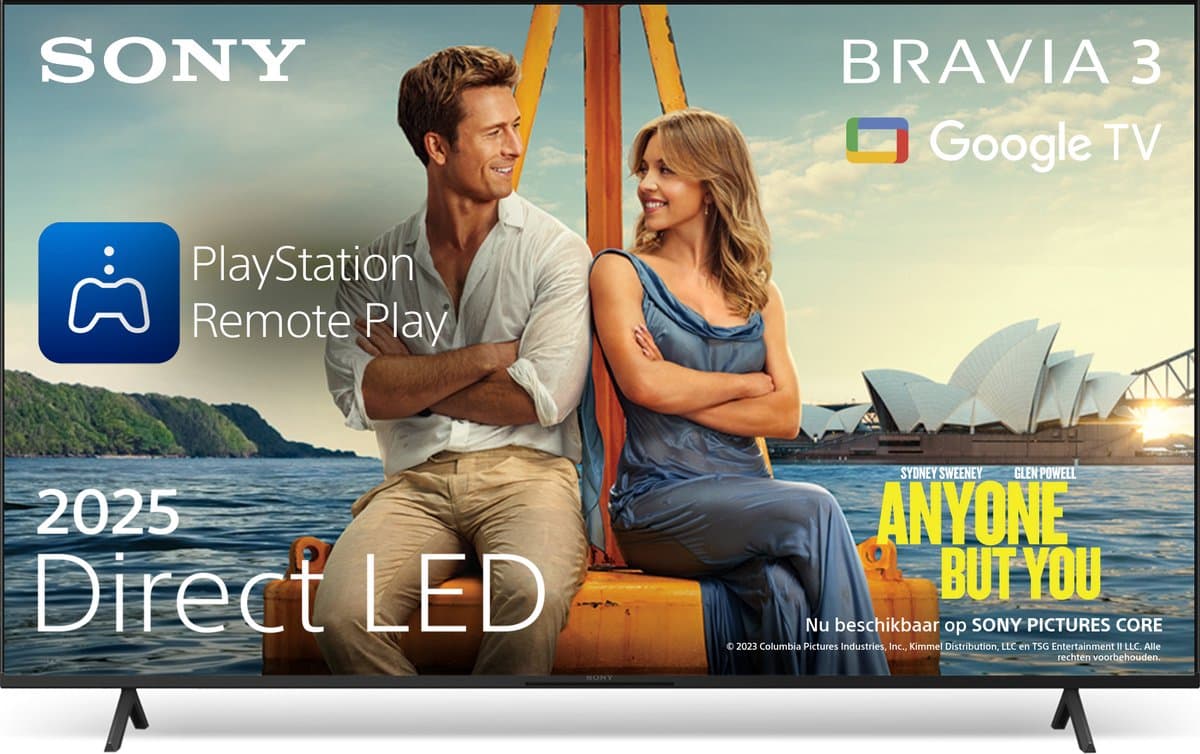
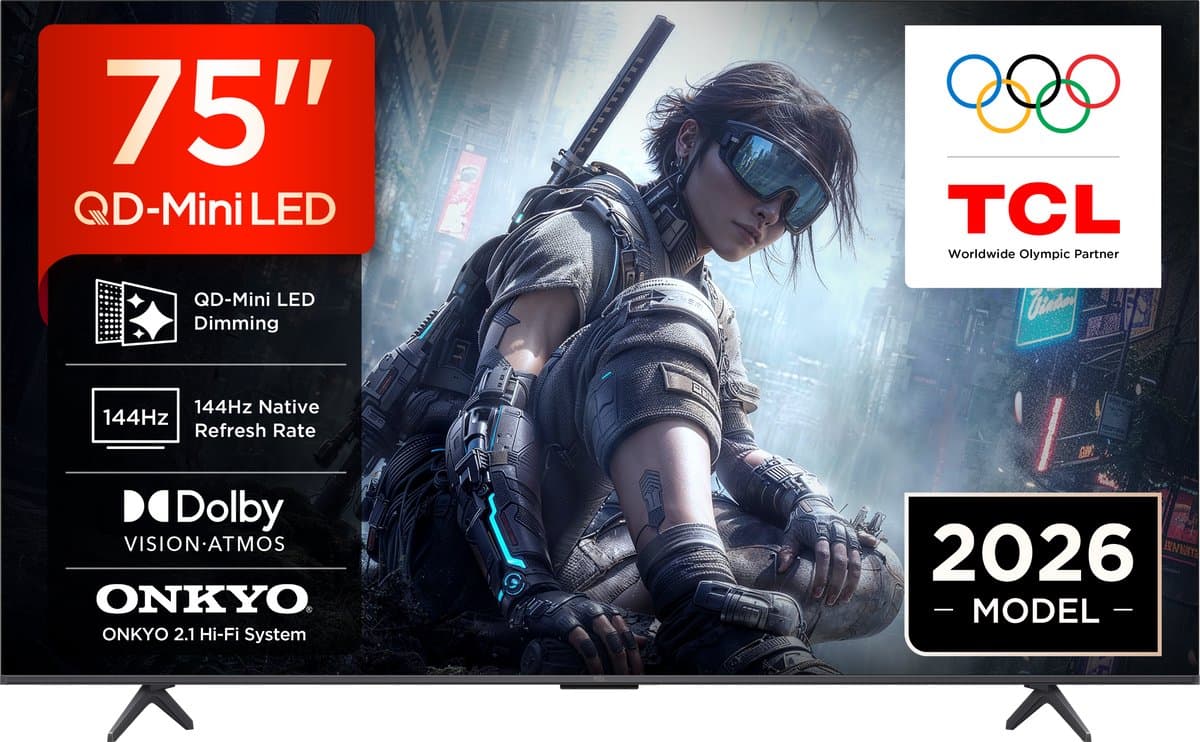
If you watch in a darkened room in the evenings, choose OLED: perfect black levels, infinite contrast and wide viewing angles make it the best choice for films and series. The Samsung S90F OLED 55" (€900–€1,100) is the recommended entry-level model; the LG OLED evo G55 77" (€2,000–€2,400) for a larger screen. For bright living rooms or as a budget option, QLED delivers more brightness per euro: the Samsung Neo QLED QN82F 50" (€600–€800) and the Samsung QLED Q7F4 55" (€700–€900) are solid choices. All models have been compared on specifications and user experiences.
Browse all televisions for current prices.
Best OLED Choice: Samsung S90F OLED — Best Entry-Level OLED (€900–€1,100)
The Samsung 55" OLED S90F (2025) combines Samsung's Neural Quantum Processor with a QD-OLED panel for excellent brightness and the perfect black levels of OLED. Supports Dolby Vision IQ, HDR10+, 144 Hz and four HDMI 2.1 ports.
Best for: film enthusiasts, gamers (PS5/Xbox), dark to semi-dark living rooms.
Best OLED Choice: LG OLED evo G55 77" — Premium OLED Large Format (€2,000–€2,400)
The LG 77" OLED evo G55 (2025) is a Gallery OLED with high peak brightness (up to 3,000 nits), the Alpha 11 AI processor and webOS 25. Wall-mount design, MLA technology for improved brightness and Dolby Atmos support.
Best for: large living rooms, cinema-quality viewing, premium picture quality.
Best QLED Choice: Samsung Neo QLED QN82F 50" — Best QLED Value (€600–€800)
The Samsung Neo QLED QN82F (2025) uses Mini-LED backlighting with Quantum Matrix Technology. High brightness (up to 2,000 nits), AI picture enhancement, 4K at 144 Hz and built-in Gaming Hub. No burn-in risk.
Best for: bright living rooms, gamers, families with varying viewing conditions.
Best QLED Choice: Samsung QLED Q7F4 55" — Entry QLED with Quantum Dot (€700–€900)
The Samsung QLED Q7F4 (2025) offers 100% colour volume thanks to quantum dots, Motion Xcelerator Turbo and HDMI 2.1. A step above standard 4K LCD TVs in colour accuracy.
Best for: those who want better colour accuracy than standard LCD without the price of OLED.
Comparison Table: OLED vs QLED
| Feature | OLED | QLED |
|---|---|---|
| Black level | Perfect (pixels off) | Very good (local dimming) |
| Brightness | Good (up to ~3,000 nits) | Excellent (up to ~4,000 nits) |
| Viewing angles | Wide | More limited |
| Response time | < 0.1 ms | 2–8 ms |
| Burn-in risk | Low (reduced in 2026) | None |
| Price (55 inch) | From approx. €900 | From approx. €600 |
| Price (77 inch+) | From approx. €2,000 | From approx. €1,200 |
How Does OLED Work?
OLED stands for Organic Light-Emitting Diode. Each pixel has its own light source and can switch off completely — delivering perfect black and infinite contrast. No backlight is required, making the screen thinner as well.
How Does QLED Work?
QLED stands for Quantum-dot Light-Emitting Diode. QLED uses an LED backlight with a layer of quantum dots that improve colour accuracy and brightness. No burn-in risk, higher peak brightness, but no perfect black.
Which Technology for Which Use Case?
- Evening film viewing: OLED wins — perfect black, wide viewing angles, cinema contrast.
- Bright living room during the day: QLED wins — higher peak brightness, visible in sunlight.
- Gaming: Both are excellent; OLED for fastest response, QLED for no burn-in risk with static HUDs.
- Group sports viewing: QLED slightly better — wider effective viewing angles, lower risk.
Mini-LED and QD-OLED
Mini-LED combines QLED with thousands of small dimming zones — black level closer to OLED. QD-OLED adds quantum dots to an OLED panel for better brightness and the perfect blacks of OLED. The Samsung S90F is an example of this.
Frequently Asked Questions
Is OLED worth it compared to QLED?
Yes, if you mainly watch in a dark or semi-dark room and want the best picture quality. If you watch during the day in a bright room, QLED offers better value for money.
How long does an OLED TV last?
Modern OLED panels last at least 100,000 hours — over 11 years at 24 hours per day use. In practice you will upgrade before the panel wears out.
Can I use a QLED TV for gaming?
Absolutely. Many QLED models support 4K at 120 Hz, VRR and low input lag. The Samsung Neo QLED range delivers excellent gaming performance with no burn-in risk.
When is the best time to buy a TV?
January (clearance), May–June (new models arrive, old ones are discounted) and November (Black Friday).
Browse all televisions on Productvraag to compare current prices.
Producten uit dit artikel

Sony Bravia 3 55" 4K Led (2025)

TCL 75T8D - 75 inch - 4K QD-MiniLED - 2026 - Smart TV

TCL Q65H

DJI Mic Mini 2S (2 TX + 1 RX + Oplaadcase)
Sirui Traveler 5AX + B00K Balhoofd

Sirui PH10 Gimbal Head
Got a question? Just ask.
We'll email you back within 24 hours. No sales pitch.