Best Espresso Machines Under €500 (2026): Top 6 Compared
The best espresso machines under €500 of 2026 compared on grinder, milk froth, ease of use and maintenance — with fair prices from Dutch webshops.
Our top pick
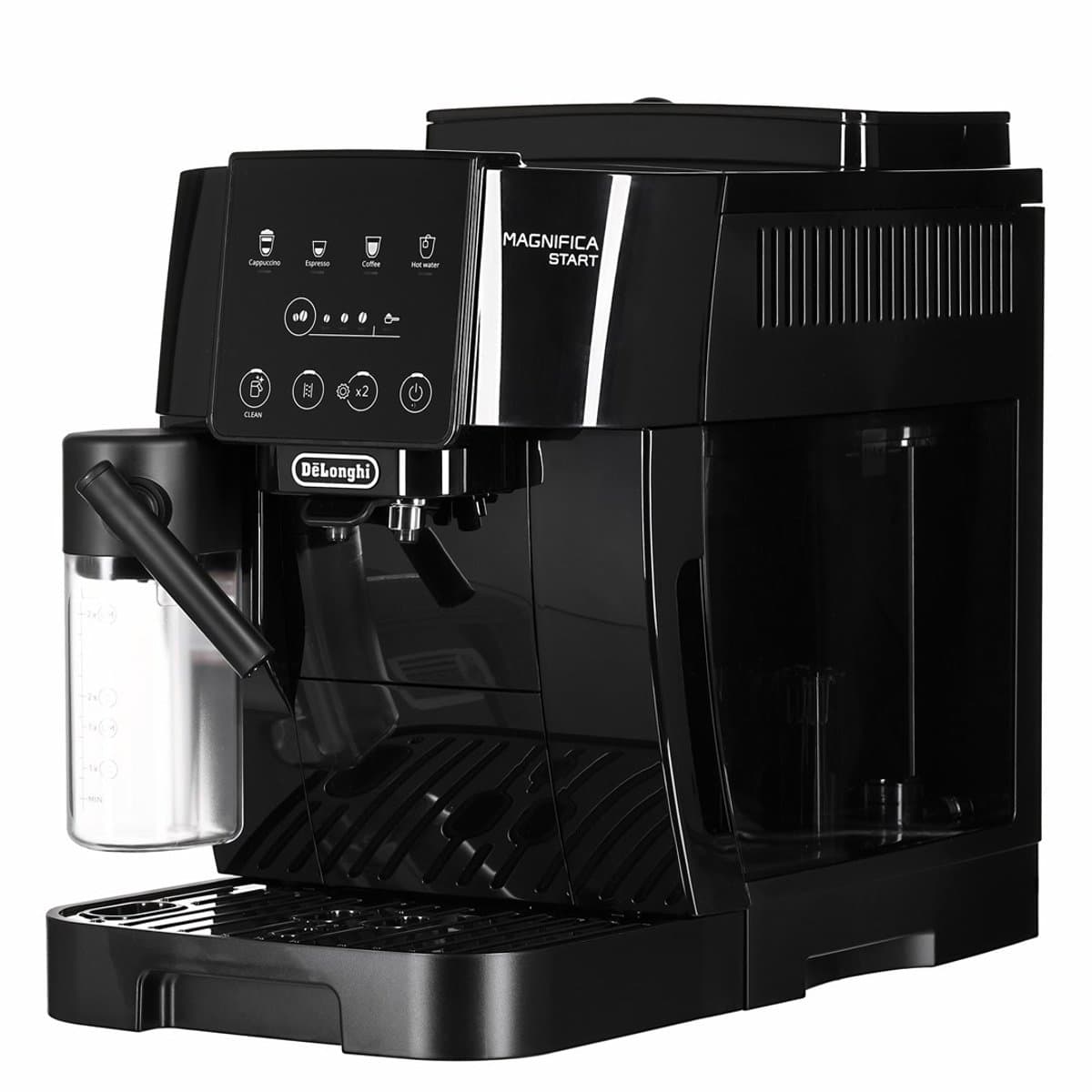
DeLonghi Magnifica Start ECAM220.60.B Bean to Cup Coffee Machine - Black
Best allrounder
From
€ 359,00
at bol
Top producten vergelijken


The best espresso machines under €500 of 2026 compared on grinder, milk froth, ease of use and maintenance — with fair prices from Dutch webshops.
A good espresso machine doesn't have to cost a thousand euros — under €500 you'll find fully automatic machines that grind beans, brew coffee and froth milk without you having to become a barista. The difference with top-tier machines lies in the details: fewer programmes, slightly more noise, a smaller water tank. For home use without endless fine-tuning, that's a fair trade-off. In this guide we compare the best espresso machines under €500 of 2026 on grinder quality, milk froth, ease of use and maintenance, based on specifications, user reviews and current prices at Dutch webshops.
What to look for in an espresso machine under €500?
Fully automatic or manual espresso machine. Fully automatic machines (with a built-in grinder) deliver espresso at the push of a button; manual espresso machines (with a portafilter) demand more technique but give more control. Under €500, a fully automatic is almost always the better choice for home use.
Grinder. Ceramic is quieter and lasts longer than steel, but steel is sharper for bold roasts. Both work fine at this price point; ceramic is more pleasant in daily use.
Milk froth. A manual steam wand gives the best froth quality but takes practice; a one-touch milk system is more convenient but often more consistent in quality. Choose what suits how you drink your coffee.
Water tank and bean hopper. Under €500, you're typically looking at 1.5 to 1.8 litres of water and 250 to 300 grams of beans — enough for 8 to 12 espressos per fill. Smaller means refilling more often.
Maintenance. A removable brew group lets you rinse it out weekly — that prevents flavour loss and extends the machine's life. Fixed brew groups (JURA, some Krups models) can only be cleaned with tablets and are slightly more maintenance-free, but not user-serviceable.
DeLonghi Magnifica Start ECAM220.60.B — Best allrounder (around €330-€400)
The Magnifica Start is the logical starting point for most people: a quiet ceramic grinder, a removable brew group for easy maintenance, and a manual steam wand that lets you make good cappuccinos with a bit of practice. The menu is deliberately simple — four drinks at the push of a button, no complicated submenus. For around €360, you get the most espresso for your money here.
Compare prices — DeLonghi Magnifica Start ECAM220.60.B Bean to Cup Coffee Machine - Black
More from DE‘LONGHI · Prices verified: 19 h ago · 1 shop

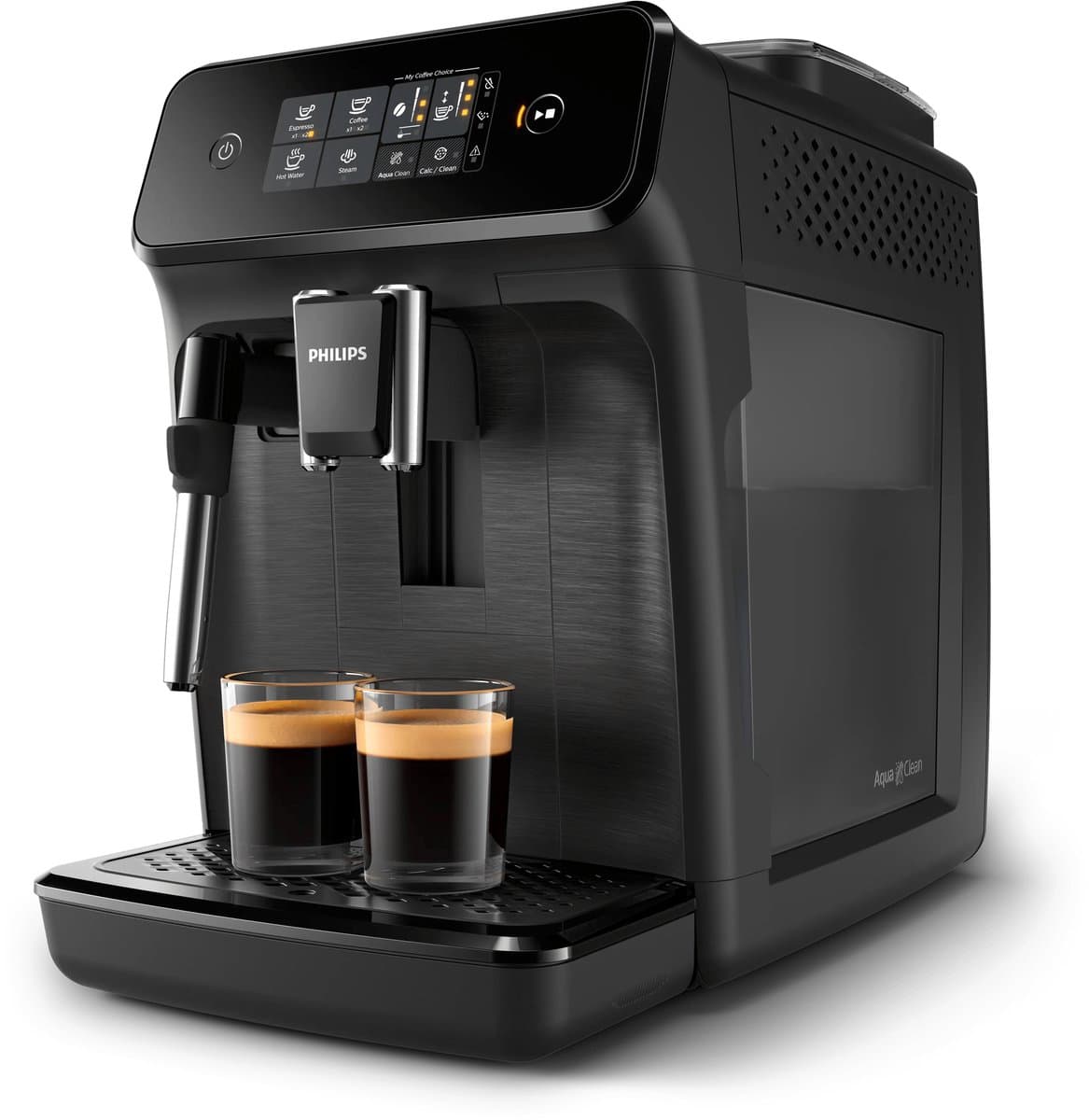
Philips EP1220/00 — Best entry-level fully automatic (around €270-€320)
Philips' entry-level fully automatic is surprisingly complete: a ceramic grinder, twelve grind settings, a removable brew group and the quiet Silent Brew motor. Only two drinks (espresso, coffee) and manual milk frothing, but at this price point that's a fair trade. For anyone who wants espresso, straight up, without the frills.
Compare prices — Philips EP1220/00 - Espressomachine - Zwart
More from Philips · Prices verified: 19 h ago · 2 shops

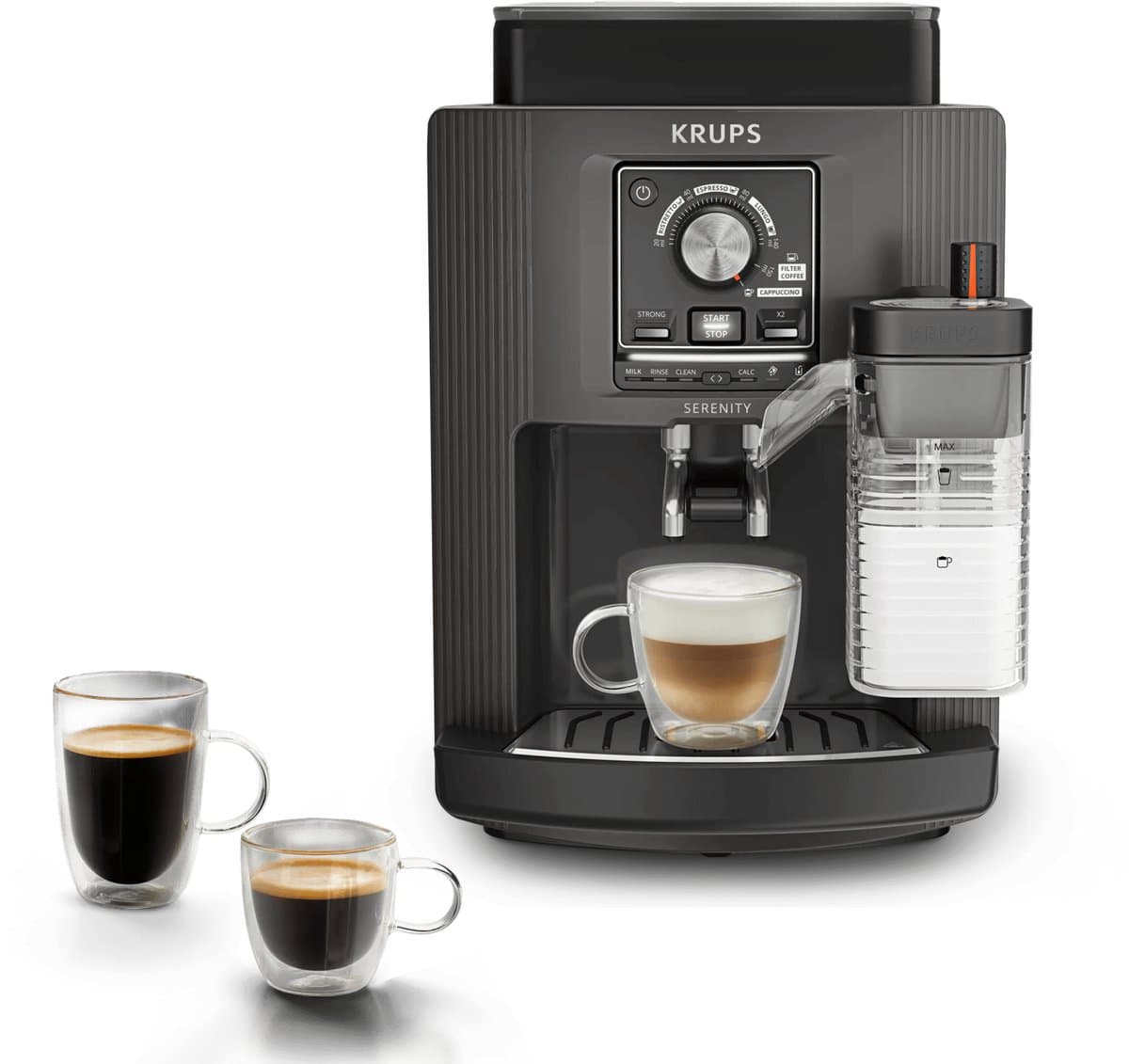
Krups Serenity EA402H — Best for milk-based coffee (around €300-€350)
The Serenity EA402H combines a ceramic grinder with a OneTouch Cappuccino system: one press delivers a cappuccino with freshly frothed milk in the cup. The menu is more extensive than on the Philips and DeLonghi (latte macchiato, cappuccino, espresso, coffee). For milk-coffee drinkers, the time saved is significant.
Compare prices — Krups Serenity EA402H - Volautomatische Espressomachine - Coal - Snel Opgewarmd
More from Krups · Prices verified: 20 h ago · 2 shops

Krups Evidence EA8968 — Best milk system in its class (around €400-€480)
The Evidence goes a step beyond the Serenity: an intuitive colour display with per-user profiles, 15 recipes and a comprehensive milk system that can dispense warm milk separately alongside froth. For households where everyone wants their own coffee drink, this is the most complete choice within this price bracket.
Compare prices — Krups Evidence EA8968
More from Krups · Prices verified: 20 h ago · 2 shops
Krups EA8110 — Cheapest allrounder (around €260-€310)
The EA8110 is the cheapest Krups with a quiet metal grinder and a removable brew group. Manual steam wand for milk froth, three types of coffee at one press. If you want to stay under €300 and still want a complete machine, this is the best choice — the frothing system is less refined than on the pricier Serenity/Evidence.
Compare prices — Krups EA8110
More from Krups · Prices verified: 19 h ago · 1 shop
JURA P.A.G. 25048 — Best for low-maintenance users (around €160-€200)
A refurbished JURA for under €200 is a surprisingly good deal: fixed brew group (not removable, so maintenance is only via tablets), but Swiss build quality that lasts for years. The menu is more basic than on the newer Krups models, but the coffee is excellent. Only recommended with at least a 1-year warranty from the seller.
Compare prices — JURA P.A.G. 25048
More from Jura · Prices verified: 19 h ago · 2 shops
Entry-level fully automatic versus €800+ machines — what are you missing?
Under €500, what you mainly give up is: number of drinks at one press (10+ recipes is rare), water tank and bean hopper size, grinder noise level (top models are noticeably quieter), and the degree of per-user personalisation. In terms of brew quality, the difference in the cup is small — a well-adjusted €400 machine makes better espresso than a poorly maintained €1,000 machine.
Frequently asked questions about espresso machines under €500
Can a €300 machine really make good espresso?
Yes, provided you use fresh beans (younger than a month past the roast date) and filtered water. The machine is one of three factors; beans and water are equally important. Cheap beans through a top-end machine give mediocre espresso; good beans through a €300 machine often give an excellent result.
How often should I descale?
Depends on your water hardness and use: with average Dutch tap water (moderately hard), every 2-3 months with daily use. Most machines will tell you when it's time. Putting off descaling is the number one cause of early failures.
Is a fully automatic or a manual espresso machine better?
For home use under €500, a fully automatic is almost always more practical: beans in, press, done. A manual espresso machine (for example the Sage Bambino) gives more barista control but requires practice, a separate grinder and more handling every day. Only recommended if you enjoy making coffee for its own sake.
Pod machine or fully automatic at this price point?
A pod machine (Nespresso, Dolce Gusto) is cheaper to buy but more expensive to run (~€0.40 per cup versus ~€0.10 with beans). After 6-12 months of daily use, you'll have recouped the price difference and you'll have free choice of beans on top. For occasional use, a pod machine remains more practical.
What is the best brand?
There is no single "best": DeLonghi is the safest choice for beginners, Krups offers the most value for milk-based coffee, Philips is quiet and compact, JURA lasts the longest. Choose based on which coffee you drink and how much maintenance you want to do yourself.
Meer producten vergelijken


Got a question? Just ask.
We'll email you back within 24 hours. No sales pitch.