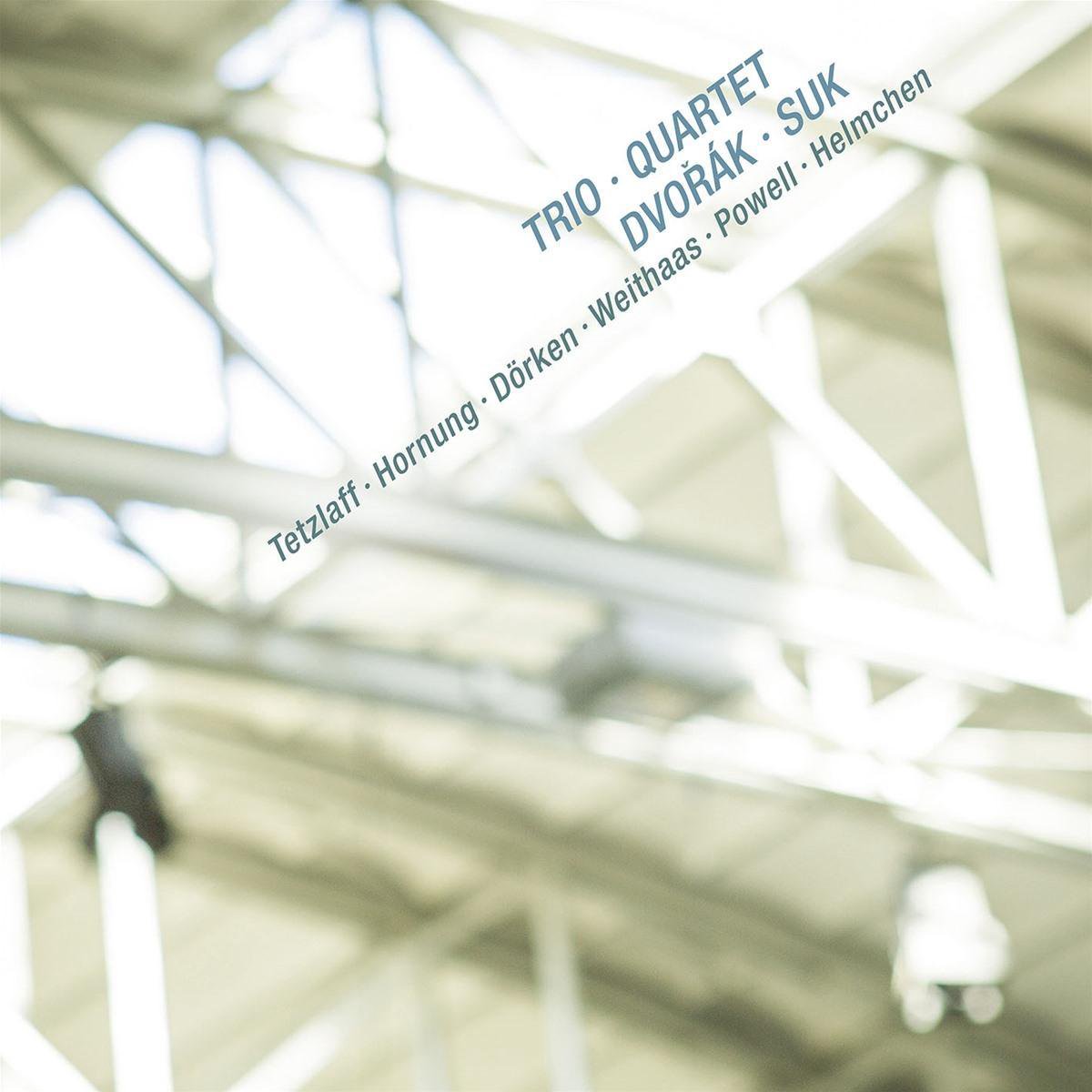
EAN: 4260085534043
Dvořák: „In 1876, Dvořák jotted down the Trio in G Minor, op. 26, in a mere 16 days. By that time, some of his masterpieces, including the Moravian Duets and the Stabat Mater, were starting to gain wider recognition – but the encounter with Brahms, which would stabilize him as an artist and clarify his musical tendencies, only took place the following year. Thus, many passages in this trio seem to be groping for direction: as Dvořák specialist John Clapham once remarked, they are still musically “insecure”. Still, certain traits in this trio already seem to reveal Dvořák’s profound affinity with Brahms on an instinctive level. Gradually emerging from a series of brief motifs, the first movement’s main theme is subjected to thematic treatment throughout. This movement is also the longest, lasting a total of twelve minutes. Its generally gloomy, sombre mood does not yet reflect the true personal style of he who would soon write the Slavonic Dances. Notwithstanding, certain cello cantilenas in the slow movement and towards the end of the sombre, violent scherzo offer a foretaste of the great melodic gifts that Dvořák would soon reveal to the world. Suk: „…The composition Suk submitted for the final exam is none other than the Piano Quartet in A Minor, op. 1. The first movement’s disarming impetuousness engulfs the listener like a shock wave, betraying not only the influence of Brahms, the true doyen of Late Romantic chamber music, but also that of Dvořák, his own teacher. More significantly, however, a personal style already becomes noticeable in this work. The energetic introductory movement is followed by a clear contrast: a muted, nocturne-like, melodically intense Adagio that sets in with a warm cello cantilena. The second movement’s expressive middle section exudes a fairy-tale-like atmosphere, similar to the one in the incidental music that Suk would later compose for the play Radúz and Mahulena. The final movement begins with a march-like main theme that is alternated with contrasting episodes, thus giving the general structural impression of a rondo… (Excerpts from the Booklet by Pedro Obiera)
Ook bij Amazon
Vergelijk de prijs op Amazon.nl
We mailen je binnen 24 uur een antwoord over de Trio & Quartet. Geen verkooppraat.
Dvořák: „In 1876, Dvořák jotted down the Trio in G Minor, op.
26, in a mere 16 days.
By that time, some of his masterpieces, including the Moravian Duets and the Stabat Mater, were starting to gain wider recognition – but the encounter with Brahms, which would stabilize him as an artist and clarify his musical tendencies, only took place the following year.
Thus, many passages in this trio seem to be groping for direction: as Dvořák specialist John Clapham once remarked, they are still musically “insecure”.
Still, certain traits in this trio already seem to reveal Dvořák’s profound affinity with Brahms on an instinctive level.
Gradually emerging from a series of brief motifs, the first movement’s main theme is subjected to thematic treatment throughout.
This movement is also the longest, lasting a total of twelve minutes.
Its generally gloomy, sombre mood does not yet reflect the true personal style of he who would soon write the Slavonic Dances.
Notwithstanding, certain cello cantilenas in the slow movement and towards the end of the sombre, violent scherzo offer a foretaste of the great melodic gifts that Dvořák would soon reveal to the world.
Suk: „…The composition Suk submitted for the final exam is none other than the Piano Quartet in A Minor, op.
1.
The first movement’s disarming impetuousness engulfs the listener like a shock wave, betraying not only the influence of Brahms, the true doyen of Late Romantic chamber music, but also that of Dvořák, his own teacher.
More significantly, however, a personal style already becomes noticeable in this work.
The energetic introductory movement is followed by a clear contrast: a muted, nocturne-like, melodically intense Adagio that sets in with a warm cello cantilena.
The second movement’s expressive middle section exudes a fairy-tale-like atmosphere, similar to the one in the incidental music that Suk would later compose for the play Radúz and Mahulena.
The final movement begins with a march-like main theme that is alternated with contrasting episodes, thus giving the general structural impression of a rondo… (Excerpts from the Booklet by Pedro Obiera).
De Trio & Quartet is een product van Sonic Rendezvous. Op deze pagina vind je de volledige productinformatie, actuele prijzen en reviews.
De Trio & Quartet is momenteel verkrijgbaar vanaf € 31,24 bij Bol.com. Prijzen kunnen dagelijks wisselen.
Voor de Trio & Quartet is nog geen reviewscore beschikbaar. Bekijk de productspecificaties en beschrijving om te beoordelen of het product bij jou past.
De Trio & Quartet is verkrijgbaar bij Bol.com. Klik op een aanbieder om direct naar de productpagina te gaan.
De prijzen worden dagelijks automatisch ververst vanuit onze partnerwebshops. De definitieve prijs inclusief eventuele acties zie je op de webshop zelf.
Productvraag verzamelt productinformatie, prijzen en reviews van Nederlandse webshops op één plek. Zo kun je snel zien wat een product kost, wat gebruikers ervan vinden en waar je het kunt kopen.