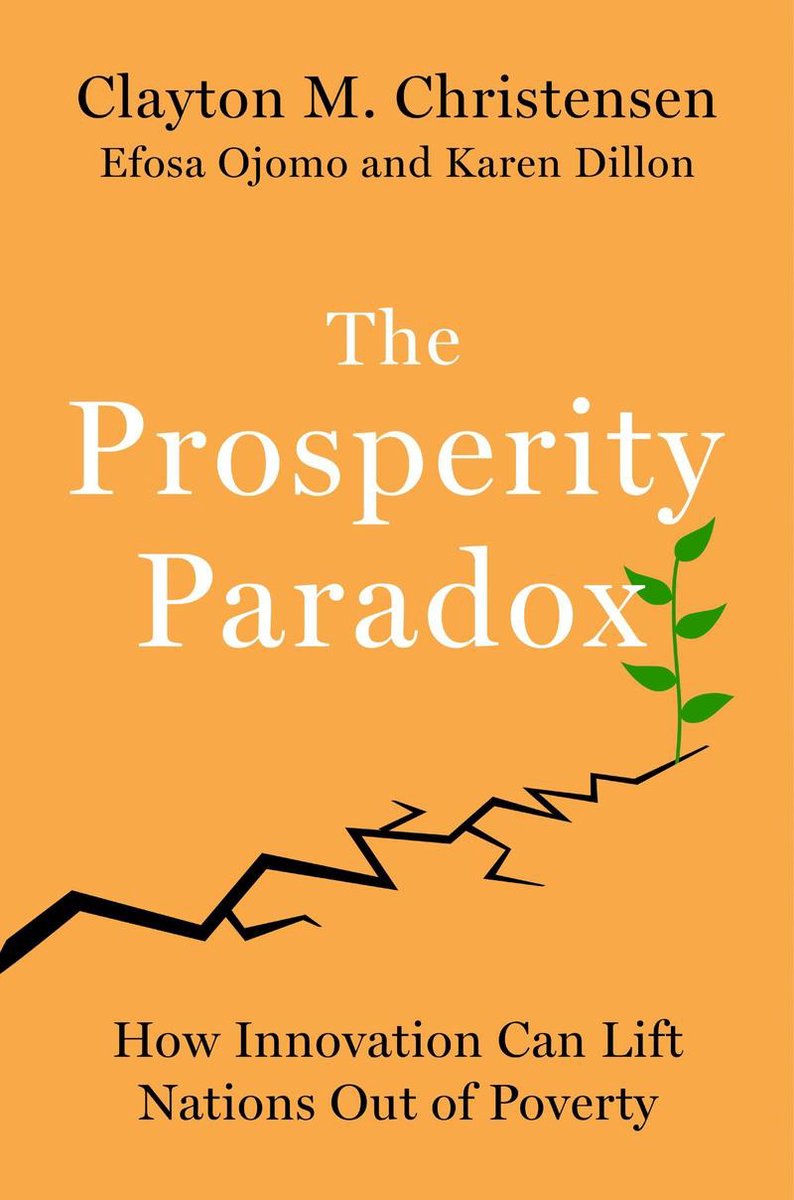
EAN: 9780062851826
Resolving the Paradox
Starving children on street corners. Slums without adequate clean water and sanitation. Hopeless prospects for employment amid a growing youth population. Most of us are moved by the painful signs of poverty we see in poor countries all around the world. Though some progress has been made, upwards of 750 million people still live in extreme poverty, surviving on less than $1.90 a day. We all want to help. But what might seem to be the most obvious solution to these problems—directly assisting poor countries by investing to fix these visible signs of poverty—has not been as successful as many of us would like. You only have to look at the billions of dollars that have been channeled to these problems over the years with relatively slow progress to conclude that something is not quite right. With these efforts, we may be easing poverty for some—but we’re not moving the needle enough long term.
What if we considered this problem through a different lens? What if, instead of trying to fix the visible signs of poverty, we focused instead on creating lasting prosperity? This may require a counterintuitive approach to economic development, but one that will cause you to see opportunities where you might least expect them. We wrote this book to celebrate the role innovation can play, even in the most difficult of circumstances, in creating and sustaining prosperity even in some of the most desperate parts of the world. By supporting and investing in market-creating innovations, we inadvertently engage in nation building.
Clayton M. Christensen, the author of such business classics as The Innovator’s Dilemma and the New York Times bestseller How Will You Measure Your Life, and co-authors Efosa Ojomo and Karen Dillon reveal why so many investments in economic development fail to generate sustainable prosperity, and offers a groundbreaking solution for true and lasting change.
Global poverty is one of the world’s most vexing problems. For decades, we’ve assumed smart, well-intentioned people will eventually be able to change the economic trajectory of poor countries. From education to healthcare, infrastructure to eradicating corruption, too many solutions rely on trial and error. Essentially, the plan is often to identify areas that need help, flood them with resources, and hope to see change over time.
But hope is not an effective strategy.
Clayton M. Christensen and his co-authors reveal a paradox at the heart of our approach to solving poverty. While noble, our current solutions are not producing consistent results, and in some cases, have exacerbated the problem. At least twenty countries that have received billions of dollars’ worth of aid are poorer now.
Applying the rigorous and theory-driven analysis he is known for, Christensen suggests a better way. The right kind of innovation not only builds companies—but also builds countries. The Prosperity Paradox identifies the limits of common economic development models, which tend to be top-down efforts, and offers a new framework for economic growth based on entrepreneurship and market-creating innovation. Christensen, Ojomo, and Dillon use successful examples from America’s own economic development, including Ford, Eastman Kodak, and Singer Sewing Machines, and shows how similar models have worked in other regions such as Japan, South Korea, Nigeria, Rwanda, India, Argentina, and Mexico.
The ideas in this book will help companies desperate for real, long-term growth see actual, sustainable progress where they’ve failed before. But The Prosperity Paradox is more than a business book; it is a call to action for anyone who wants a fresh take for making the world a better and more prosperous place.
Ook bij Amazon
Vergelijk de prijs op Amazon.nl
We mailen je binnen 24 uur een antwoord over de The Prosperity Paradox How Innovation Can Lift Nations Out of Poverty Harper Business. Geen verkooppraat.
Resolving the Paradox
Starving children on street corners. Slums without adequate clean water and sanitation. Hopeless prospects for employment amid a growing youth population. Most of us are moved by the painful signs of poverty we see in poor countries all around the world. Though some progress has been made, upwards of 750 million people still live in extreme poverty, surviving on less than $1.90 a day. We all want to help. But what might seem to be the most obvious solution to these problems—directly assisting poor countries by investing to fix these visible signs of poverty—has not been as successful as many of us would like. You only have to look at the billions of dollars that have been channeled to these problems over the years with relatively slow progress to conclude that something is not quite right. With these efforts, we may be easing poverty for some—but we’re not moving the needle enough long term.
What if we considered this problem through a different lens? What if, instead of trying to fix the visible signs of poverty, we focused instead on creating lasting prosperity? This may require a counterintuitive approach to economic development, but one that will cause you to see opportunities where you might least expect them. We wrote this book to celebrate the role innovation can play, even in the most difficult of circumstances, in creating and sustaining prosperity even in some of the most desperate parts of the world. By supporting and investing in market-creating innovations, we inadvertently engage in nation building.
Clayton M. Christensen, the author of such business classics as The Innovator’s Dilemma and the New York Times bestseller How Will You Measure Your Life, and co-authors Efosa Ojomo and Karen Dillon reveal why so many investments in economic development fail to generate sustainable prosperity, and offers a groundbreaking solution for true and lasting change.
Global poverty is one of the world’s most vexing problems. For decades, we’ve assumed smart, well-intentioned people will eventually be able to change the economic trajectory of poor countries. From education to healthcare, infrastructure to eradicating corruption, too many solutions rely on trial and error. Essentially, the plan is often to identify areas that need help, flood them with resources, and hope to see change over time.
But hope is not an effective strategy.
Clayton M. Christensen and his co-authors reveal a paradox at the heart of our approach to solving poverty. While noble, our current solutions are not producing consistent results, and in some cases, have exacerbated the problem. At least twenty countries that have received billions of dollars’ worth of aid are poorer now.
Applying the rigorous and theory-driven analysis he is known for, Christensen suggests a better way. The right kind of innovation not only builds companies—but also builds countries. The Prosperity Paradox identifies the limits of common economic development models, which tend to be top-down efforts, and offers a new framework for economic growth based on entrepreneurship and market-creating innovation. Christensen, Ojomo, and Dillon use successful examples from America’s own economic development, including Ford, Eastman Kodak, and Singer Sewing Machines, and shows how similar models have worked in other regions such as Japan, South Korea, Nigeria, Rwanda, India, Argentina, and Mexico.
The ideas in this book will help companies desperate for real, long-term growth see actual, sustainable progress where they’ve failed before. But The Prosperity Paradox is more than a business book; it is a call to action for anyone who wants a fresh take for making the world a better and more prosperous place.
De The Prosperity Paradox How Innovation Can Lift Nations Out of Poverty Harper Business is een product. Op deze pagina vind je de volledige productinformatie, actuele prijzen en reviews.
De The Prosperity Paradox How Innovation Can Lift Nations Out of Poverty Harper Business is momenteel verkrijgbaar vanaf € 10,72 bij Bol.com. Prijzen kunnen dagelijks wisselen.
De The Prosperity Paradox How Innovation Can Lift Nations Out of Poverty Harper Business heeft (nog) geen eigen reviewscore. Op Productvraag staat gemiddeld een waardering van 4,85/5 op basis van 1178 reviews van bezoekers.
De The Prosperity Paradox How Innovation Can Lift Nations Out of Poverty Harper Business is verkrijgbaar bij Bol.com. Klik op een aanbieder om direct naar de productpagina te gaan.
De prijzen worden dagelijks automatisch ververst vanuit onze partnerwebshops. De definitieve prijs inclusief eventuele acties zie je op de webshop zelf.
Productvraag verzamelt productinformatie, prijzen en reviews van Nederlandse webshops op één plek. Zo kun je snel zien wat een product kost, wat gebruikers ervan vinden en waar je het kunt kopen.