EAN: 9780812223873
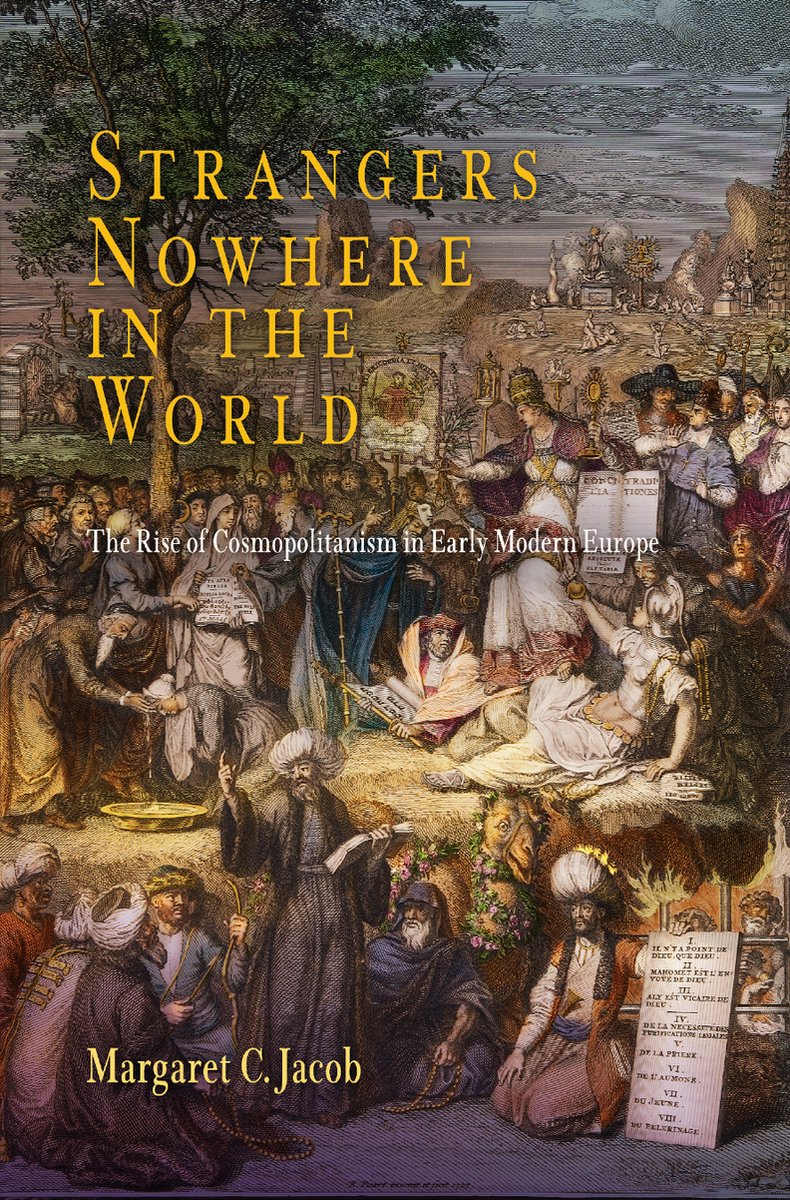
The mingling of aristocrats and commoners in a southern French city, the jostling of foreigners in stock markets across northern and western Europe, the club gatherings in Paris and London of genteel naturalists busily distilling plants or making air pumps, the ritual fraternizing of "brothers" in privacy and even secrecy-Margaret Jacob invokes all these examples in Strangers Nowhere in the World to provide glimpses of the cosmopolitan ethos that gradually emerged over the course of the seventeenth and eighteenth centuries.
Jacob investigates what it was to be cosmopolitan in Europe during the early modern period. Then-as now-being cosmopolitan meant the ability to experience people of different nations, creeds, and colors with pleasure, curiosity, and interest. Yet such a definition did not come about automatically, nor could it always be practiced easily by those who embraced its principles. Cosmopolites had to strike a delicate balance between the transgressive and the subversive, the radical and the dangerous, the open-minded and the libertine. Jacob traces the history of this precarious balancing act to illustrate how ideals about cosmopolitanism were eventually transformed into lived experiences and practices. From the representatives of the Inquisition who found the mixing of Catholics and Protestants and other types of "border crossing" disruptive to their authority, to the struggles within urbane masonic lodges to open membership to Jews, Jacob also charts the moments when the cosmopolitan impulse faltered.
Jacob pays particular attention to the impact of science and merchant life on the emergence of the cosmopolitan ideal. In the decades after 1650, modern scientific practices coalesced and science became an open enterprise. Experiments were witnessed in social settings of natural inquiry, congenial for the inculcation of cosmopolitan mores. Similarly, the public venues of the stock exchanges brought strangers and foreigners together in ways encouraging them to be cosmopolites. The amount of international and global commerce increased greatly after 1700, and luxury tastes developed that valorized foreign patterns and designs.
Drawing upon sources as various as Inquisition records and spy reports, minutes of scientific societies and the writings of political revolutionaries, Strangers Nowhere in the World reveals a moment in European history when an ideal of cultural openness came to seem strong enough to counter centuries of chauvinism and xenophobia. Perhaps at no time since, Jacob cautions, has that cosmopolitan ideal seemed more fragile and elusive than it is today.
Ook bij Amazon
Vergelijk de prijs op Amazon.nl
We mailen je binnen 24 uur een antwoord over de Strangers Nowhere in the World: The Rise of Cosmopolitanism in Early Modern Europe. Geen verkooppraat.
The mingling of aristocrats and commoners in a southern French city, the jostling of foreigners in stock markets across northern and western Europe, the club gatherings in Paris and London of genteel naturalists busily distilling plants or making air pumps, the ritual fraternizing of "brothers" in privacy and even secrecy-Margaret Jacob invokes all these examples in Strangers Nowhere in the World to provide glimpses of the cosmopolitan ethos that gradually emerged over the course of the seventeenth and eighteenth centuries.
Jacob investigates what it was to be cosmopolitan in Europe during the early modern period. Then-as now-being cosmopolitan meant the ability to experience people of different nations, creeds, and colors with pleasure, curiosity, and interest. Yet such a definition did not come about automatically, nor could it always be practiced easily by those who embraced its principles. Cosmopolites had to strike a delicate balance between the transgressive and the subversive, the radical and the dangerous, the open-minded and the libertine. Jacob traces the history of this precarious balancing act to illustrate how ideals about cosmopolitanism were eventually transformed into lived experiences and practices. From the representatives of the Inquisition who found the mixing of Catholics and Protestants and other types of "border crossing" disruptive to their authority, to the struggles within urbane masonic lodges to open membership to Jews, Jacob also charts the moments when the cosmopolitan impulse faltered.
Jacob pays particular attention to the impact of science and merchant life on the emergence of the cosmopolitan ideal. In the decades after 1650, modern scientific practices coalesced and science became an open enterprise. Experiments were witnessed in social settings of natural inquiry, congenial for the inculcation of cosmopolitan mores. Similarly, the public venues of the stock exchanges brought strangers and foreigners together in ways encouraging them to be cosmopolites. The amount of international and global commerce increased greatly after 1700, and luxury tastes developed that valorized foreign patterns and designs.
Drawing upon sources as various as Inquisition records and spy reports, minutes of scientific societies and the writings of political revolutionaries, Strangers Nowhere in the World reveals a moment in European history when an ideal of cultural openness came to seem strong enough to counter centuries of chauvinism and xenophobia. Perhaps at no time since, Jacob cautions, has that cosmopolitan ideal seemed more fragile and elusive than it is today.
De Strangers Nowhere in the World: The Rise of Cosmopolitanism in Early Modern Europe is een product. Op deze pagina vind je de volledige productinformatie, actuele prijzen en reviews.
De Strangers Nowhere in the World: The Rise of Cosmopolitanism in Early Modern Europe is momenteel verkrijgbaar vanaf € 32,99 bij Bol.com. Prijzen kunnen dagelijks wisselen.
De Strangers Nowhere in the World: The Rise of Cosmopolitanism in Early Modern Europe heeft (nog) geen eigen reviewscore. Op Productvraag staat gemiddeld een waardering van 4,85/5 op basis van 1178 reviews van bezoekers.
De Strangers Nowhere in the World: The Rise of Cosmopolitanism in Early Modern Europe is verkrijgbaar bij Bol.com. Klik op een aanbieder om direct naar de productpagina te gaan.
De prijzen worden dagelijks automatisch ververst vanuit onze partnerwebshops. De definitieve prijs inclusief eventuele acties zie je op de webshop zelf.
Productvraag verzamelt productinformatie, prijzen en reviews van Nederlandse webshops op één plek. Zo kun je snel zien wat een product kost, wat gebruikers ervan vinden en waar je het kunt kopen.