Laatst gecontroleerd: 9 jun 2026
Laagste prijsBol.com
Op voorraad · Gratis verzending · 10 werkdagen
Twijfel? Stel je vraag.
We mailen je binnen 24 uur een antwoord over de John Foulds: Orchestral Works. Geen verkooppraat.
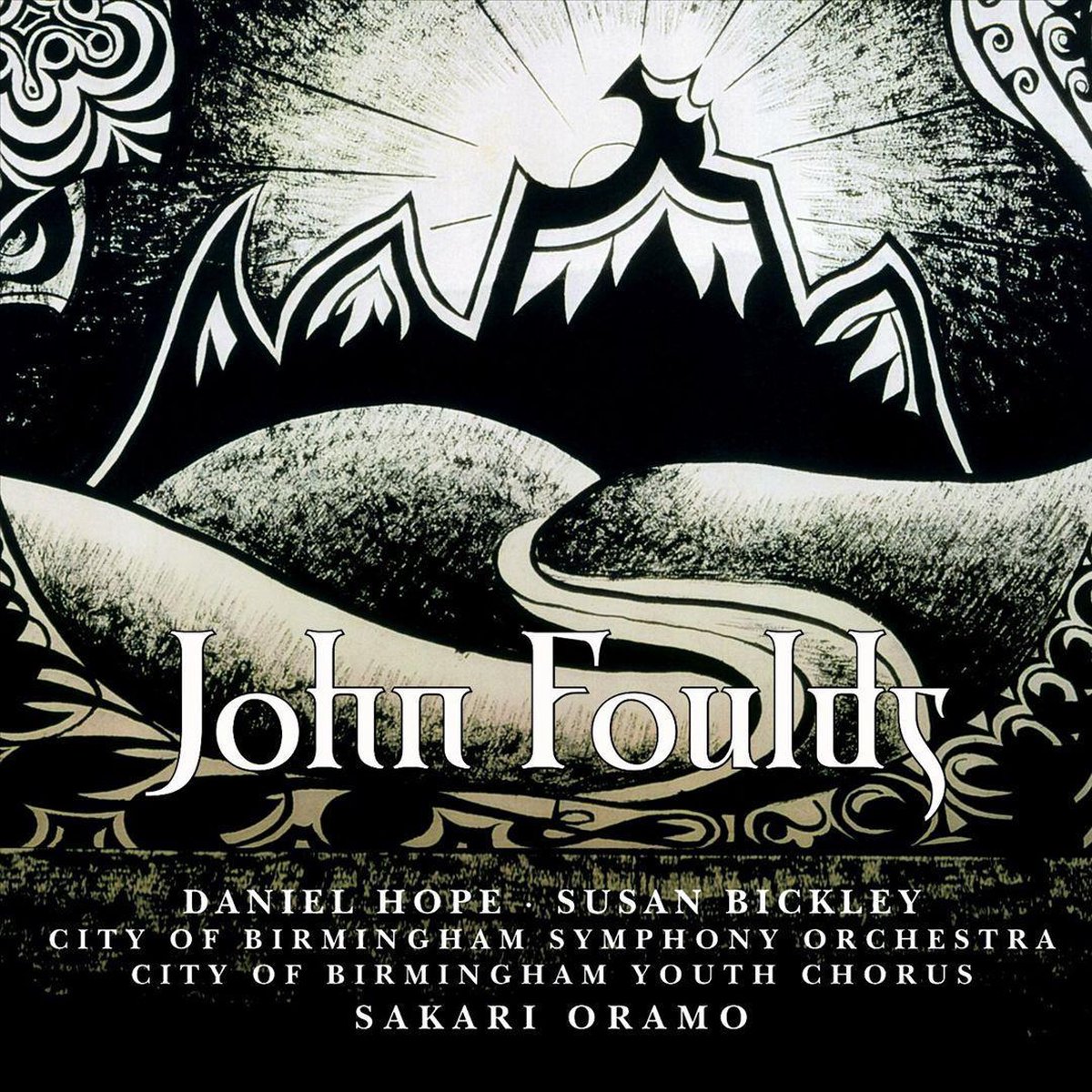
John Foulds : Daniel Hope, Susan Bickley, City Of Birmingham Symphony Orchestra, City Of Birmingham Youth Chorus*, Sakari Oramo – Mirage • Three Mantras • Lyra Celtica • Apotheosis
Listening to the four brilliant works by the British composer John Foulds (1880-1939) collected on this disc, it's hard to fathom why his music hasn't been properly appreciated sooner. Colorful, evocative, and often quite exciting, it is a bit more eccentric than the work of Foulds's more widely known English contemporaries, such as Vaughan Williams or Holst, but it's scarcely any more "difficult" for the listener. It may well be unusually difficult to perform, but today's orchestras are accustomed to far worse, and the City of Birmingham Symphony Orchestra rises splendidly to its challenges in these recordings. Speaking of challenges, soprano Susan Bickley has mastered more than her share for Foulds's Lyra Celtica, a concerto for (wordless) voice with orchestra that combines Celtic influences with the microtonal scales of Indian music -- both of which were among the composer's persistent fascinations -- and expresses the breadth of Foulds's unique musical imagination. His Three Mantras, intended as preludes to a never-completed Sanskrit opera, Avatara, are even more striking. The kaleidoscopic orchestration of the first movement gives way to a time-stopping meditation in the second (complete with wordless women's chorus, with shades of "Neptune" from Holst's Planets) and an inexorable rhythmic fantasia in the third (like Holst's "Mars," but more unpredictable). The two earlier works included here are more conventional, but both belong to a genre invented by Foulds: the "Music-Poem," which differs from the common "tone poem" by more closely imitating the division of poetry into stanzas. Apotheosis is an elegiac composition for violin and orchestra; Daniel Hope does the solo honors here with the same dark intensity he has brought to his other recent concerto recordings. Finally, Mirage, one of many works that was never publicly performed in Foulds's lifetime, is ambitious both musically and philosophically. Its program addresses human ambition in the face of "Immutable Nature," but its metaphysics take a backseat to sumptuous orchestration and the interplay of abundant melodic ideas. Less original than the Mantras -- Richard Strauss is the most palpable of influences here -- Mirage is nonetheless an engaging and satisfying work that will repay the interest of any listener willing to enter into the singular musical mind of John Foulds.